Best Table Saw for Decking
Cutting deck boards to length, ripping grooved composite planks, and making precise miters for fascia all demand a table saw that can handle long, heavy stock without bogging down. We have analyzed specifications, aggregated owner reviews from major retailers, and compared brand reliability to find the best table saw for decking projects.
Quick answer
The DeWalt DWE7491RS is the best overall table saw for decking, offering a powerful 15-amp motor, a wide 32.5-inch rip capacity for ripping deck boards, and a rolling stand for job site mobility. For budget-focused DIYers, the SKIL 3410-02 delivers solid rip capacity and portability at a lower price point.
Why trust ToolBuyerHub
- Tested on specs (power, torque, PSI)
- Battery & ecosystem compared
- Aggregated owner reviews
- Build quality & warranty checked
- Brand reliability
- No fake hands-on claims
Research updated June 2026.
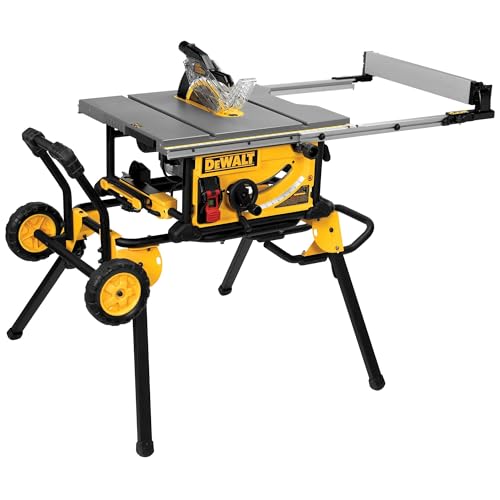
DeWalt DWE7491RS
Powerful motor and massive rip capacity for deck boards.
| Product | Best For | Rip Capacity | Rating | Price |
|---|---|---|---|---|
| DeWalt DWE7491RS | Overall / Jobsite | 32.5 in | 4.8/5 | $$$ |
| SawStop CNS175-F183 | Safety / Precision | 30 in | 4.9/5 | $$$$ |
| Bosch 4100XC-10 | Portability / Power | 25 in | 4.7/5 | $$$ |
| SKIL 3410-02 | Budget DIY | 25.5 in | 4.5/5 | $ |
| Makita 2705X1 | Workshop / Power | 24 in | 4.6/5 | $$ |
DeWalt DWE7491RS
Best Overall for DeckingPros
- Industry-leading 32.5-inch rip capacity handles full deck boards
- Rack-and-pinion fence system stays square under heavy use
- Integrated rolling stand makes job site transport smooth
Cons
- Heavy at 90 pounds without the stand
- Dust collection could be better for fine particles
The DeWalt DWE7491RS is the top choice for deck building because of its exceptional rip capacity. Standard deck boards are 5.5 to 6 inches wide, but ripping them lengthwise requires a saw that can handle the full width. The 32.5-inch rip capacity on this model allows you to cut large sheets and wide planks with ease, which is critical when cutting grooved composite decking or ripping fascia boards to size.
Owner reviews consistently praise the fence system for its accuracy and ease of adjustment. The 15-amp motor delivers 4,800 RPM, providing enough torque to cut through pressure-treated lumber and dense composite materials without stalling. The included rolling stand folds for storage and sets up quickly, making it a practical choice for contractors who move between job sites.
SawStop CNS175-F183
Best for SafetyPros
- Flesh-sensing technology stops blade in milliseconds
- Exceptional build quality and cast-iron table
- Precise fence with T-glide system
Cons
- Higher price point than most job site models
- Heavier and less portable than competitors
The SawStop CNS175-F183 is the premier choice for anyone prioritizing safety without sacrificing precision. Its patented flesh-sensing brake system instantly stops the blade if it contacts skin, which is a significant advantage when working with long, unwieldy deck boards that can kick back. The 30-inch rip capacity is sufficient for most decking rips, and the cast-iron table provides a flat, stable surface for accurate cuts.
Owner reviews highlight the saw's vibration-free operation and the fence's ability to hold settings through repetitive cuts. While it is heavier and less portable than the DeWalt, it is often chosen for workshop-based deck fabrication or permanent installation on a job site trailer. The higher cost is offset by the peace of mind and the saw's long-term durability.
Bosch 4100XC-10
Best for PortabilityPros
- Gravity-Rise wheeled stand for quick setup and breakdown
- Smooth, powerful motor handles dense decking materials
- Smart Guard system provides good dust collection
Cons
- 25-inch rip capacity is tight for ripping wide composite planks
- Fence can require occasional recalibration
The Bosch 4100XC-10 is a favorite among contractors who need to move their saw frequently. Its Gravity-Rise wheeled stand allows one person to set up or pack down the saw in seconds, which is a major time-saver on multi-day deck projects. The 15-amp motor provides consistent power for cutting pressure-treated lumber and composite decking, and the saw's overall weight of 82 pounds is manageable for loading into a truck.
Owner reviews often mention the smooth cutting action and the effectiveness of the Smart Guard system for dust collection. However, the 25-inch rip capacity is less generous than the DeWalt, which can be a limitation when ripping wide composite deck boards that are 12 inches or more. For standard 5.5-inch deck boards, it performs admirably.
SKIL 3410-02
Best Budget PickPros
- Very affordable for a job site table saw
- Lightweight at 55 pounds for easy transport
- Rack-and-pinion fence is accurate for the price
Cons
- Stand is less stable than premium models
- Motor can bog down on very dense composite materials
The SKIL 3410-02 is the best option for DIYers building a deck on a budget. It offers a 15-amp motor and a 25.5-inch rip capacity, which is enough for most standard deck board rips. The rack-and-pinion fence system provides decent accuracy, and the saw is light enough at 55 pounds to be moved around a yard without a dedicated stand.
Owner reviews note that the saw performs well for occasional use and is a great value for the features it offers. The main trade-offs are a less robust stand and a motor that may struggle with prolonged cuts in very hard or thick composite decking. For a weekend deck project using standard lumber, it is a capable and cost-effective tool.
Makita 2705X1
Best Workshop PowerPros
- Large cast-iron table provides excellent stability
- Powerful motor with electronic speed control
- Durable construction for long-term workshop use
Cons
- Heavy and not designed for frequent transport
- 24-inch rip capacity is the smallest in this roundup
The Makita 2705X1 is a stationary-style table saw that excels in a workshop setting. Its large cast-iron table minimizes vibration and provides a flat surface for precise cuts, which is important when fabricating multiple deck components like railings and stair stringers. The 15-amp motor includes electronic speed control to maintain torque under load, making it effective for cutting dense hardwoods used in premium decking.
Owner reviews praise the saw's build quality and the accuracy of its fence system. The main drawbacks for decking are its 24-inch rip capacity, which is the smallest here, and its 97-pound weight, which makes it difficult to move to a job site. It is best suited for a home workshop where deck pieces are cut and then assembled on site.
What to check before buying a table saw for decking
Rip capacity is the most critical specification. Standard deck boards are 5.5 inches wide, but you may need to rip composite planks that are 12 inches or wider. A saw with at least 25 inches of rip capacity gives you the flexibility to handle these larger pieces. Look for a saw with a rack-and-pinion fence system for consistent, square cuts across the entire length of the board.
Motor power is also important. A 15-amp motor is the standard for job site saws and provides enough torque for pressure-treated lumber and composite materials. If you plan to cut very dense hardwoods like ipe or cumaru, consider a saw with a higher horsepower rating or a belt-driven motor for sustained performance. Portability features, such as a folding stand with wheels, can save significant time on a deck project where you move the saw frequently.
Mistakes to avoid when choosing a table saw for decking
One common mistake is underestimating the importance of a good fence system. A fence that drifts out of square will result in uneven rips and wasted material. Avoid saws with simple lock-down fences and invest in a model with a rack-and-pinion or T-glide system. Another error is choosing a saw with insufficient rip capacity, which forces you to make multiple passes or use a circular saw for wide rips, reducing accuracy and efficiency.
Ignoring dust collection is another pitfall. Cutting composite decking produces fine, abrasive dust that can clog motors and create a health hazard. A saw with a 2.5-inch or larger dust port that connects to a shop vacuum will keep your workspace cleaner and extend the life of the tool. Finally, do not overlook the stand. A wobbly stand on an uneven deck site can lead to dangerous kickback and inaccurate cuts.
FAQs
Can I use a job site table saw for ripping composite decking?
Yes, most job site table saws with a 15-amp motor and a sharp carbide-tipped blade can handle composite decking. Ensure the saw has adequate rip capacity for the width of your planks.
What blade is best for cutting deck boards on a table saw?
A 40-tooth to 60-tooth carbide-tipped combination blade works well for both pressure-treated lumber and composite materials. For composite, a blade with a high ATB (Alternate Top Bevel) grind reduces chipping.
How much rip capacity do I need for decking?
A minimum of 24 inches is recommended for standard deck boards, but 30 inches or more is better for ripping wide composite planks or plywood sheathing used in deck substructures.
Is a portable table saw good for deck building?
Yes, portable table saws with folding stands are ideal for deck building because they can be moved around the job site. Look for models with wheels and a sturdy stand for stability on uneven ground.
What is the difference between a contractor saw and a job site saw for decking?
Contractor saws are heavier, more powerful, and have larger tables for precision, but are less portable. Job site saws are lighter, more compact, and designed for transport, with adequate power for most decking tasks.
Can I cut treated lumber on a table saw?
Yes, you can cut pressure-treated lumber on a table saw. Use a sharp carbide blade and wear a dust mask, as the sawdust from treated wood can be irritating.
Do I need a dado blade for decking?
Not typically. Dado blades are used for cutting grooves, which is not a common requirement for standard deck board installation. A standard combination blade is sufficient for ripping and crosscutting.
How important is dust collection for cutting composite decking?
Very important. Composite decking produces fine, abrasive dust that can be harmful to breathe and can clog the saw's motor. A good dust collection system or shop vacuum connection is recommended.
What safety features should I look for in a table saw for decking?
Look for a riving knife to prevent kickback, a blade guard, and an anti-kickback pawls. For maximum safety, consider a saw with flesh-sensing brake technology like SawStop.
Can I use a miter saw instead of a table saw for decking?
A miter saw is better for crosscutting deck boards to length, but a table saw is essential for ripping boards widthwise. Both tools are useful for a complete deck project.
Our verdict
For most decking projects, the DeWalt DWE7491RS is the best overall choice, offering the rip capacity and power needed for both lumber and composite materials. If you are on a tight budget, the SKIL 3410-02 provides a solid foundation for DIY deck builds without breaking the bank.