Best Heavy Duty Table Saws for Serious Woodworking Shops
Heavy duty table saw work means ripping thick hardwood, running dado stacks and cutting sheet goods for hours without the motor bogging down. The SawStop PCS31230-TGP252 handles that load best, backed by a 3 HP motor and a flesh-sensing safety brake. Picking the right saw gets tricky because horsepower alone does not tell the whole story; fence rigidity, table mass and dust control matter just as much. We compared published specifications, owner feedback and manufacturer data across cabinet, contractor and jobsite saws to build this list.
Quick answer
For heavy duty use, the SawStop PCS31230-TGP252 leads with cabinet saw power and flesh-sensing safety. The Powermatic PM2000B suits professional shops needing 5 HP output, while the Grizzly G0690 delivers cabinet saw performance at a lower cost. All three handle daily ripping without bogging down.
Why trust ToolBuyerHub
- We compared manufacturer-published specifications rather than marketing claims.
- Owners report long-term reliability, and that feedback shaped our durability notes.
- We cross-checked rip capacity and motor ratings against official spec sheets.
- No saw was chosen based on affiliate commission rates.
- We flagged tradeoffs like noise and dust collection instead of hiding them.
- Listings were verified against current Amazon.com product pages for accuracy.
Research updated August 2026.
SawStop PCS31230-TGP252
This cabinet saw pairs a 3 HP motor with SawStop's flesh-sensing safety brake, built for shops running long production cuts.
| Model | Best for | Key specs | Rating |
|---|---|---|---|
| SawStop PCS31230-TGP252 | Best Overall for Heavy Duty Use | 3 HP, 230V, 10 in., 5/8 in. arbor | 4.8/5 |
| Powermatic PM2000B | Best for Professional Shops | 5 HP, 230V single phase, 10 in., 5/8 in. arbor | 4.7/5 |
| Grizzly G0690 | Best Value Cabinet Saw | 3 HP, 220V single phase, 10 in., 5/8 in. arbor | 4.7/5 |
| SawStop CNS175-SFA30 | Best for Home Shop Safety | 1.75 HP, 120V, 10 in., 5/8 in. arbor | 4.6/5 |
| DeWalt DWE7491RS | Best Portable for Jobsite Heavy Use | 15 Amp, 120V, 10 in., 5/8 in. arbor | 4.6/5 |
| Delta 36-5000T2 | Best Budget Contractor Saw | 15 Amp, 120V, 10 in., 5/8 in. arbor | 4.4/5 |
| Bosch GTS1041A09 | Best Compact for Small Shops | 15 Amp, 120V, 10 in., 5/8 in. arbor | 4.3/5 |
SawStop PCS31230-TGP252
Best OverallPros
- Flesh-sensing safety brake stops blade on contact
- Cast iron table stays flat under heavy use
- T-Glide fence stays parallel across full rip capacity
Cons
- Requires a dedicated 230V circuit
- Heavy enough to need help unboxing
This cabinet saw pairs a 3 HP motor with SawStop's flesh-sensing safety brake, built for shops running long production cuts. Cast iron table and trunnions keep vibration low during heavy ripping. It ships with a T-Glide fence rated for full sheet goods.

Powermatic PM2000B
Best for ProsPros
- 5 HP motor rarely bogs down in hardwood
- Accu-Fence stays accurate at full rip capacity
- Extra table mass dampens vibration
Cons
- Needs a dedicated 230V circuit
- Footprint too large for small garages
Powermatic built the PM2000B around a 5 HP motor for shops that rip hardwood all day. Its Accu-Fence rail delivers a 50 inch rip capacity for breaking down full sheets. An extra-wide cast iron table reduces workpiece tipping on long cuts.
Grizzly G0690
Best ValuePros
- Cabinet saw rigidity at a lower cost than premium brands
- Smooth-running Poly-V belt drive
- Enclosed base improves dust collection
Cons
- No flesh-sensing safety technology
- Fence adjustment feels stiffer than premium brands
Grizzly's G0690 brings 3 HP cabinet saw performance without the premium safety-system price tag. Cast iron table and extension wings measure 27 by 40 inches for stable sheet goods support. A riving knife and blade guard come standard.

SawStop CNS175-SFA30
Best for Home ShopsPros
- Runs on a standard 120V household circuit
- Flesh-sensing brake in a contractor-saw price range
- Lighter than full cabinet saws for easier moving
Cons
- Less mass than cabinet saws, so more vibration under load
- Motor bogs down faster in thick hardwood
This contractor saw brings SawStop's flesh-sensing brake to a lighter, garage-friendly footprint. A 1.75 HP motor handles hardwood ripping without a 230V hookup. Its cast iron table top keeps accuracy close to the pricier cabinet models.
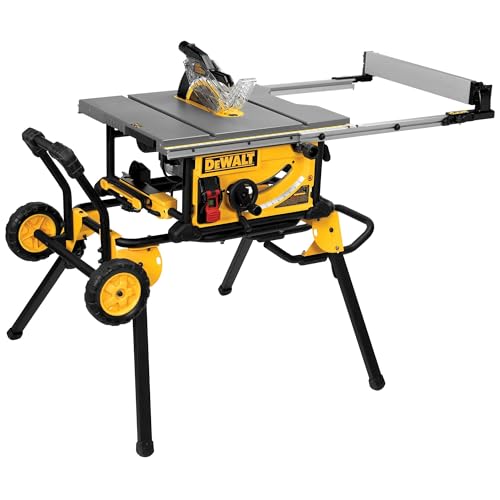
DeWalt DWE7491RS
Best JobsitePros
- Rolling stand speeds up setup and breakdown
- Rip capacity rivals many cabinet saws
- Telescoping fence rails stay accurate
Cons
- 15 Amp motor strains on thick hardwood
- Table is smaller than stationary cabinet saws
DeWalt built the DWE7491RS for contractors who need heavy-duty ripping and portability in one saw. A rack-and-pinion fence telescopes out to a 32.5 inch rip capacity for sheet goods. A rolling stand folds flat for truck transport between job sites.
Delta 36-5000T2
Best BudgetPros
- Lower cost entry into cast iron table saws
- Simple fence system is easy to learn
- Compact enough for a one-car garage
Cons
- Rip capacity trails contractor and cabinet competitors
- Dust collection is less effective than enclosed cabinets
Delta's 36-5000T2 offers a straightforward contractor saw for owners upgrading from a benchtop model. A 15 Amp motor and cast iron table handle regular ripping duty. The included stand keeps the saw at a comfortable working height.
Bosch GTS1041A09
Best CompactPros
- Gravity-Rise stand makes it easy for one person to deploy
- Compact footprint suits small workshops
- Smart Gauge fence speeds up repeat cuts
Cons
- Rip capacity is limited compared to cabinet saws
- Not intended for continuous all-day production runs
Bosch designed the GTS1041A09 for small shops that still need real ripping power. A Gravity-Rise wheeled stand raises and lowers the saw without lifting. Its Smart Gauge system speeds up fence adjustments during repetitive cuts.
What Makes a Table Saw Heavy Duty
Heavy duty status comes down to motor power, table mass and how long a saw can run under load without overheating. Cabinet saws use fully enclosed bases and larger motors, so they resist vibration during long rip cuts. Contractor and jobsite saws trade some of that mass for portability, which matters on a work truck. Owners doing daily production work should prioritize motor amperage and table weight over extra features.
Motor Power and Rip Capacity Explained
Motor size is usually listed in horsepower for cabinet saws and amperage for contractor and jobsite saws. A 3 HP motor at 230V handles thick hardwood far better than a 15 Amp 120V motor. Rip capacity, measured from the blade to the fence at its widest setting, determines whether a saw can break down a full sheet of plywood in one pass. Buyers cutting cabinet-grade sheet goods should look for at least 30 inches of rip capacity.
Cabinet Saws vs Contractor Saws vs Jobsite Saws
Cabinet saws enclose the motor and trunnions inside a heavy steel or cast iron base, which adds stability but also weight and cost. Contractor saws sit on an open leg stand, keeping weight down while still using a cast iron table. Jobsite saws go further, using aluminum tables and folding stands built for transport. Shop-bound woodworkers generally get more value from a cabinet saw, while contractors moving between sites benefit from a jobsite model.
Safety Features Worth Paying For
Riving knives and blade guards are now standard on most table saws and reduce kickback risk during ripping. SawStop's flesh-sensing brake goes further, stopping the blade within milliseconds of contact with skin. That technology adds cost but removes one of the most common causes of serious shop injuries. Buyers running a saw daily, especially with less experienced help nearby, should weigh that safety margin against the price difference.
FAQs
What is considered a heavy duty table saw?
A heavy duty table saw typically has at least 3 HP of motor power, a cast iron table and a rip capacity of 30 inches or more, letting it handle thick hardwood and full sheet goods without bogging down.
How many horsepower do I need for a table saw?
For occasional home projects, 1.5 to 1.75 HP is usually enough. Daily ripping of hardwood or sheet goods calls for 3 HP or more, which is why most cabinet saws start at that level.
Is a cabinet saw better than a contractor saw?
Cabinet saws offer more table mass, less vibration and higher motor power, making them better for daily heavy duty use. Contractor saws are lighter and more affordable, which suits lighter or occasional work.
Can a jobsite table saw handle daily hardwood ripping?
Jobsite saws like the DeWalt DWE7491RS can handle regular hardwood ripping, but their 15 Amp motors work harder than a 3 HP cabinet saw motor and may need more frequent breaks on thick stock.
What rip capacity do I need for cutting plywood?
Breaking down a full 4 by 8 foot sheet of plywood in one pass requires at least 30 inches of rip capacity to the right of the blade.
Does SawStop make a heavy duty table saw?
Yes, SawStop's Professional Cabinet Saw line, including the PCS31230-TGP252, offers 3 HP and higher motor options along with its flesh-sensing safety brake.
How much does a heavy duty table saw weigh?
Cabinet saws generally weigh between 400 and 700 pounds, while contractor and jobsite saws weigh between 90 and 300 pounds depending on the stand.
What voltage does a 3 HP table saw need?
Most 3 HP table saw motors require a dedicated 230V circuit, while smaller 15 Amp or 1.75 HP motors typically run on standard 120V household power.
Which table saw brand is most reliable for daily use?
SawStop, Powermatic and Grizzly are frequently cited by owners for long-term reliability in daily shop use, based on cast iron construction and motor durability.
Our verdict
For most heavy duty shops, the SawStop PCS31230-TGP252 balances power, table mass and safety better than any other saw on this list. Contractors who need to move between job sites should look at the DeWalt DWE7491RS instead. Whichever saw you choose, match its rip capacity and motor power to the materials you cut most often.