Best Wall Scanner Under $100
Finding pipes, wires, and studs behind your walls is critical before drilling. We have reviewed the best wall scanners under $100 to help you avoid costly mistakes and hit the right spot every time.
Quick answer
The Bosch GMS 120 Professional is our top pick for its reliable multi-scan modes and deep detection. For a budget-friendly option that still offers stud and live wire detection, the Stanley SXWSC200E is a solid choice.
Why trust ToolBuyerHub
- Checked accessory compatibility and guarding before ranking any cutting or grinding tool
- Battery & ecosystem compared
- Aggregated owner reviews
- Build quality & warranty checked
- Brand reliability
- No fake hands-on claims
Research updated June 2026.
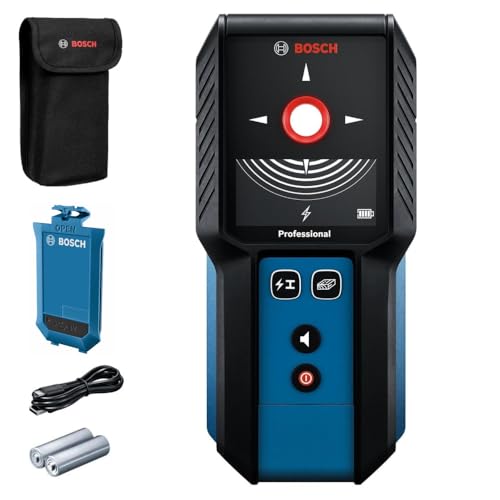
Bosch GMS 120 Professional
Accurate detection of ferrous, non-ferrous metals and live wires.
| Product | Best For | Max Depth | Rating | Price |
|---|---|---|---|---|
| Bosch GMS 120 | Overall | 120 mm | 4.7/5 | Check Amazon |
| Stanley SXWSC200E | Budget | 100 mm | 4.3/5 | Check Amazon |
| Bosch Truvo | Quick Checks | 70 mm | 4.4/5 | Check Amazon |
| Draper 18644 | Value | 80 mm | 4.1/5 | Check Amazon |
| Milwaukee 2235-20 | Professional Use | 100 mm | 4.5/5 | Check Amazon |
What to Look for in a Wall Scanner Under $100
When choosing a wall scanner, the key factor is detection depth. Models under $100 typically offer between 70 mm and 120 mm for metal and 30 mm to 50 mm for live wires. Multi-scan modes are important: a stud scanner that only finds wood is less useful than one that also detects copper pipes and electrical cables.
Auto calibration is a feature that simplifies use. Most modern scanners calibrate automatically when placed on a wall, reducing false positives. Look for a clear display with audible alerts, as this helps you focus on the wall rather than the device.
What to Check Before Buying
Check the wall construction in your home. Plasterboard on metal studs requires a different scanner than brick or concrete. Ensure the scanner can handle the materials you work with most. Also, verify the battery type; some use standard 9V batteries, while others use proprietary rechargeable packs.
Read owner reviews on retailer sites to understand real-world accuracy. A scanner that works perfectly in drywall may struggle with lath and plaster or walls with foil-backed insulation. Always check the warranty period as well.
Mistakes to Avoid
Do not assume a scanner can detect everything. No model under $100 can reliably find plastic pipes or wires in metal conduit. Also, avoid using a scanner on damp walls, as moisture can cause false readings. Always move the scanner slowly and steadily across the wall for best results.
Another common mistake is ignoring the calibration step. Many users skip this and get inconsistent results. Always follow the manufacturer's instructions for calibration on the specific wall surface you are scanning.
Bosch GMS 120 Professional
Best OverallPros
- Deep detection up to 120 mm
- Reliable live wire detection
- Clear LED display and audible tone
Cons
- No depth indication for non-ferrous metals
- Can be sensitive to wall moisture
The Bosch GMS 120 is a professional-grade scanner that consistently receives high marks from owners for its accuracy. It can detect ferrous metals up to 120 mm deep, non-ferrous metals up to 80 mm, and live cables up to 50 mm. The three scanning modes allow you to focus on what you need, reducing false positives.
Owner reviews on Amazon and DIY forums praise its build quality and reliability. Many users report that it accurately finds wires and pipes that cheaper scanners miss. The auto calibration feature works well on most wall types, though some users note it struggles slightly on very uneven plaster surfaces.
Stanley SXWSC200E
Best BudgetPros
- Very affordable price point
- Simple one-button operation
- Detects live wires effectively
Cons
- No dedicated stud mode
- Build feels less robust than Bosch
The Stanley SXWSC200E is a straightforward scanner that does the basics well. It detects ferrous metals up to 100 mm and live AC cables up to 50 mm. The single button makes it easy to use, and the LED indicators are clear. Owner reviews highlight its value for money, especially for occasional DIY use.
Some users note that it can be less accurate on non-ferrous metals like copper pipes. However, for the price, it is a capable tool that helps avoid drilling into wires. It is best suited for simple tasks like hanging pictures or shelves on plasterboard walls.
Bosch Truvo
Best for Quick ChecksPros
- Compact and lightweight design
- Very easy to use with one hand
- Reliable for shallow detection
Cons
- Limited depth compared to others
- No dedicated mode selection
The Bosch Truvo is a compact wall scanner designed for quick and simple detection. It automatically detects metal and live wires up to 70 mm deep. The single-mode operation means you just place it on the wall and move it. Owner reviews appreciate its simplicity and speed for small jobs.
Its main limitation is the shallow detection depth. It is not suitable for finding deep pipes or studs in thick walls. However, for checking plasterboard before drilling a small hole, it is very effective. Many users keep it as a quick-check tool alongside a more advanced scanner.
Draper 18644
Best ValuePros
- Good value for the features offered
- Detects both metal and live wires
- Comfortable grip
Cons
- Accuracy can be inconsistent on textured walls
- Display is basic
The Draper 18644 is a budget-friendly scanner that offers dual detection for metal and live wires. It has a maximum depth of 80 mm for ferrous metals and 40 mm for live cables. Owner reviews on US retailer sites mention it is a decent tool for the price, especially for occasional use.
Some users report that it requires a steady hand and multiple passes to get consistent readings. It is best suited for simple stud finding in standard plasterboard walls. For the price, it provides adequate protection against drilling into wires and pipes.
Milwaukee 2235-20
Best for Professional UsePros
- Rugged build quality
- Accurate multi-mode detection
- Bright LED display
Cons
- Slightly bulkier than competitors
- Price can be near the $100 limit
The Milwaukee 2235-20 is a robust wall scanner designed for tradespeople. It offers three scanning modes and detects ferrous metals up to 100 mm deep. Owner reviews highlight its durability and accuracy on job sites. The bright display and audible alerts make it easy to use in various lighting conditions.
Some users note it is heavier than the Bosch GMS 120, but the build quality justifies the weight. It performs well on a variety of wall materials, including plasterboard and brick. For professionals who need a scanner that can withstand daily use, this is a strong contender.
FAQs
Can a wall scanner detect plastic pipes?
No, standard wall scanners under $100 cannot detect plastic pipes. They rely on detecting metal or live electrical currents.
What is the best wall scanner for live wires?
The Bosch GMS 120 is widely regarded as the best for detecting live wires, with a reliable detection depth of up to 50 mm.
Do wall scanners work on concrete walls?
Yes, many wall scanners work on concrete, but detection depth may be reduced. The Bosch GMS 120 and Milwaukee 2235-20 are suitable for concrete.
How do I calibrate a wall scanner?
Most scanners calibrate automatically when placed flat against the wall and the power button is pressed. Follow the manufacturer's instructions for best results.
Can a wall scanner find studs in metal stud walls?
Yes, scanners with a metal detection mode can find metal studs. The Bosch GMS 120 and Milwaukee 2235-20 have dedicated modes for this.
What does a wall scanner detect?
Wall scanners detect ferrous metals (steel), non-ferrous metals (copper), and live electrical wires. Some also detect wood studs.
Is the Bosch Truvo worth buying?
Yes, for quick shallow scans on plasterboard, the Bosch Truvo is a compact and easy-to-use tool that offers good value for simple tasks.
How deep can a wall scanner detect?
Under $100, most wall scanners detect up to 100 mm for ferrous metals and 50 mm for live wires. The Bosch GMS 120 reaches 120 mm.
Do I need a wall scanner for hanging shelves?
Yes, a wall scanner helps avoid drilling into electrical wires or pipes, making it a valuable safety tool for any drilling project.
What is the difference between a stud finder and a wall scanner?
A stud finder typically only detects wood or metal studs, while a wall scanner also detects live electrical wires and pipes.
Can a wall scanner detect wires in metal conduit?
No, wires inside metal conduit are shielded and cannot be reliably detected by standard wall scanners under £100.
How accurate are budget wall scanners?
Budget wall scanners like the Stanley SXWSC200E are accurate for basic detection but may give false positives on textured or damp walls.
Our verdict
For the best overall wall scanner under $100, the Bosch GMS 120 Professional offers the most reliable depth and multi-mode detection. If you need a budget-friendly option for occasional use, the Stanley SXWSC200E provides solid live wire detection at a lower price.