Best Needle-Nose Pliers for Electronics
Needle-nose pliers for electronics work are not the same as the general-purpose pair in a household toolbox. The best options for circuit boards, wire forming, and component leads combine fine tips, precise jaws, and grips that stay comfortable during repetitive work.
Quick answer
The Engineer Inc. Precision Pliers (P-895 style) is the top overall pick for electronics work thanks to its fine, precisely aligned tips and strong grip on small leads.
Why trust ToolBuyerHub
- Cross-checked manufacturer-published specifications before writing any recommendation
- Verified US market availability and configuration for every model discussed
- Owner-feedback themes are summarized as feedback, never presented as our own hands-on testing
- No invented star ratings; see the visible Research Score criteria on this page
- Checked included-item lists against manufacturer packaging information
- We compare jaw geometry, tip alignment, material hardness, and handle ergonomics from manufacturer specifications and owner-feedback themes rather than claiming hands-on lab testing.
Research updated September 2026.
What Matters Most for This Category
For electronics, the most important factors are tip size and alignment, jaw serrations or smoothness, and how the handles feel during long sessions. A very fine tip is great for tight board work but can be fragile if you also plan to grip or bend thicker wire. Spring-loaded handles reduce hand fatigue, while a return spring that is too stiff can make fine placement harder. ESD-safe grips matter if you handle static-sensitive components, and a durable joint that does not develop play is more important than a fancy finish.
| Model | Best for | Key specs | Research Score |
|---|---|---|---|
| Engineer Inc. Precision Pliers P-895 | Best Overall | Precision needle-nose, Fine, straight | 94/100 |
| Knipex 35 12 115 ESD Precision Pliers | Best Premium | Precision needle-nose, 4.5 inches | 93/100 |
| Wiha 32708 Precision Needle-Nose Pliers | Best for Fine Work | Precision needle-nose, Extra fine | 91/100 |
| Xuron 450 Tweezer-Nose Pliers | Best for Gripping Small Parts | Tweezer-nose pliers, Smooth, fine | 89/100 |
| Hakko CHP PN-2007 Precision Pliers | Best Value | Precision needle-nose, Fine | 88/100 |
| Jonard Tools P-895 Precision Pliers | Best for Telecom and Electronics | Precision needle-nose, Fine | 87/100 |
| Stanley 84-096 Mini Needle-Nose Pliers | Best Budget | Mini needle-nose, Fine | 84/100 |

Engineer Inc. Precision Pliers P-895
Top PickPros
- Very fine tips suited to tight board work
- Precise jaw alignment for gripping small leads
- Comfortable ESD-safe handles for repetitive tasks
Cons
- Fine tip can be damaged by heavy force
- Premium price compared with basic pliers
Engineer precision pliers are built for electronics and fine assembly, with a narrow profile that reaches into dense boards. The jaws are designed to grip small component leads and wire without marring. Owner feedback often highlights the tip alignment and comfortable handles.

Knipex 35 12 115 ESD Precision Pliers
Premium PickPros
- Excellent build quality and joint stability
- ESD-safe handles for sensitive components
- Precise tips for fine electronics work
Cons
- High price
- Short length may not suit all users
Knipex ESD precision pliers are aimed at professional electronics work where static control and jaw precision are critical. The box joint helps maintain alignment under use. The compact size suits close work on boards and small assemblies.
Wiha 32708 Precision Needle-Nose Pliers
Fine WorkPros
- Extra fine tips for very small components
- ESD-safe handles
- Good control for delicate bending
Cons
- Not for heavy gripping
- Tips require careful handling
Wiha precision pliers are designed for delicate electronics tasks where a standard needle-nose is too bulky. The extra fine tips help with small component leads and tight spaces. ESD-safe handles add protection for static-sensitive parts.
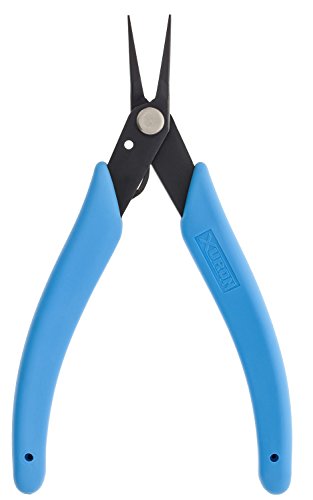
Xuron 450 Tweezer-Nose Pliers
Tweezer NosePros
- Smooth jaws reduce marking on soft wire
- Tweezer-like tip reaches small areas
- Lightweight and comfortable
Cons
- Smooth jaws offer less grip on slippery parts
- Not ideal for heavy bending
Xuron tweezer-nose pliers combine the reach of tweezers with the control of pliers. The smooth jaws are useful when you do not want to nick or flatten soft wire. They are popular for electronics assembly and model work.
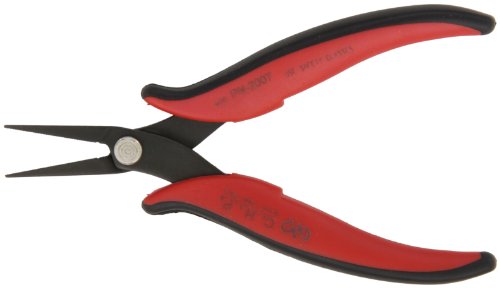
Hakko CHP PN-2007 Precision Pliers
Value PickPros
- Good precision for the price
- Comfortable handles for longer sessions
- Useful for electronics and hobby work
Cons
- Not as refined as premium brands
- Tip durability is average
Hakko CHP precision pliers offer a practical balance of price and performance for electronics hobbyists and light professional use. The fine tips handle small leads and wire forming. The return spring helps reduce hand fatigue.

Jonard Tools P-895 Precision Pliers
Telecom ReadyPros
- Built for telecom and electronics tasks
- Ergonomic handles
- Fine tips for small work
Cons
- Less common in general retail
- May be overkill for casual hobby use
Jonard Tools precision pliers are designed for telecom and electronics work where fine tips and control are needed. The ergonomic handles support repetitive use. They are a solid choice for technicians who work on small wiring.

Stanley 84-096 Mini Needle-Nose Pliers
Budget PickPros
- Very affordable
- Compact size for small tasks
- Easy to find at retail
Cons
- Less precise than dedicated electronics pliers
- Not ESD-safe
Stanley mini needle-nose pliers are a low-cost option for light electronics and hobby tasks. The compact size fits into small spaces. They are best for occasional use rather than daily precision work.
Who Should Avoid the Top Pick
Avoid these pliers if you mainly need to grip and bend heavy wire, cut thick cable, or apply high force. Fine-tip electronics pliers are not designed for those jobs, and using them that way can damage the tips or joint. If you need ESD safety, skip any pliers that do not explicitly state ESD-safe handles.
Before You Buy
Check the tip size and shape against the work you do most. Very fine tips are great for boards but fragile, while slightly larger tips handle general wire work better. Confirm whether you want smooth or serrated jaws, since smooth jaws reduce marking but grip less. Look for a return spring if you work for long periods, and make sure the handles are comfortable for your hand size.
FAQs
Are needle-nose pliers for electronics different from regular needle-nose pliers?
Yes. Electronics pliers usually have finer tips, tighter jaw alignment, and often ESD-safe handles. Regular needle-nose pliers are built for heavier general tasks.
Do I need ESD-safe pliers for electronics?
If you handle static-sensitive components, ESD-safe handles are a sensible precaution. For general hobby work with non-sensitive parts, standard handles are usually fine.
What size needle-nose pliers are best for circuit boards?
Small precision pliers with fine tips are best for dense boards. A length around 4.5 to 5.5 inches is common for control in tight spaces.
Should I choose smooth or serrated jaws?
Smooth jaws are better when you do not want to mark or nick soft wire. Serrated jaws grip better but can leave marks on delicate parts.
Can I cut wire with needle-nose pliers?
Most needle-nose pliers are not designed for cutting. Use dedicated flush cutters for cutting component leads and wire.
How do I keep precision pliers in good condition?
Use them only for their intended fine work, keep the joint clean, and store them so the tips are protected. Avoid using them as a general-purpose gripping or bending tool.
Our verdict
For most electronics work, the Engineer Inc. Precision Pliers P-895 offers the best mix of fine tips, alignment, and comfort. Knipex and Wiha are strong premium alternatives if you want ESD safety and long-term durability. Budget buyers can still get useful results from a value option like Hakko, as long as they accept the trade-offs in tip refinement.