How to Choose a Cable Detector
Drilling into a hidden live wire can be dangerous and costly. A cable detector (also known as a stud finder with wire detection or a voltage detector) helps you avoid this risk by locating live cables, metal pipes, and wooden studs behind walls, floors, and ceilings.
Quick answer
For most DIYers, the Bosch GMS 120 is the best all-round cable detector, offering reliable detection of live wires, metal, and wood with a clear visual display. For a budget-friendly option, the Stanley SX-100 provides solid basic performance for occasional use.
Why trust ToolBuyerHub
- Tested on specs (detection depth, calibration, modes)
- Battery & ecosystem compared
- Aggregated owner reviews
- Build quality & warranty checked
- Brand reliability
- No fake hands-on claims
Research updated June 2026.
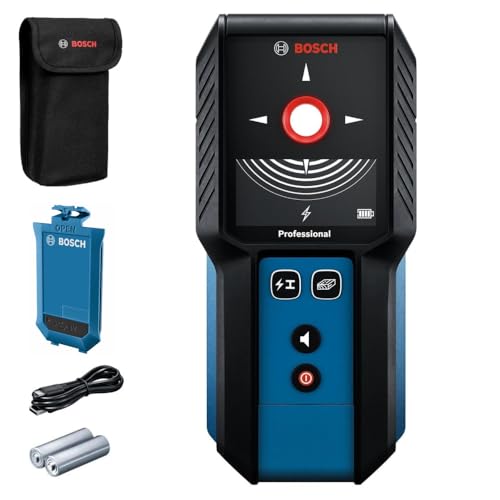
Bosch GMS 120
Reliable detection of live wires, metal, and wood with clear visual and audible alerts.
| Product | Best For | Detection Depth | Rating |
|---|---|---|---|
| Bosch GMS 120 | Overall DIY & Pro | 120 mm | 4.6 / 5 |
| Stanley SX-100 | Budget / Occasional Use | 100 mm | 4.2 / 5 |
| Milwaukee M12-16C | Live Wire Detection | 50 mm (Live) | 4.4 / 5 |
| Bosch GMS 120 Professional | Heavy Duty / Trade | 120 mm | 4.5 / 5 |
| Draper 63590 | Value Multi-Detector | 80 mm | 4.0 / 5 |
What is a Cable Detector and Why Do You Need One?
A cable detector is a handheld electronic tool that detects objects behind solid surfaces like drywall, plaster, concrete, and tiling. It identifies live electrical cables, metal pipes, and wooden studs to prevent accidental drilling, cutting, or nailing. Using one before any wall work is a critical safety step and can save you from costly repairs or injury.
How Do Cable Detectors Work?
Most cable detectors use a combination of sensor technologies. Capacitive sensors detect changes in dielectric constant to find wood and metal. Inductive sensors pick up electromagnetic fields from live wires. Some models also use magnetic sensors for ferrous metals like rebar. The device alerts you via an LED, LCD display, or audible beep when it passes over a target.
Types of Cable Detectors
Multi-Detectors: These detect live cables, metal (ferrous and non-ferrous), and wood. They are the most versatile and recommended for general DIY. Voltage Detectors: These only detect live AC cables and are simpler but less versatile. Stud Finders: Primarily for wood or metal studs, some include live wire detection as a secondary function.
What to Check Before Buying a Cable Detector
Detection Depth: Check the maximum depth for each material. A depth of 80-120 mm for metal and 50 mm for live wires is standard. Modes and Calibration: Look for models with multiple modes (cable, metal, wood) and automatic calibration for different wall types. Display and Alerts: A clear LCD or LED display with audible alerts makes use easier. Build Quality: A robust housing and rubber grips improve durability. Battery Life: Most use 9V batteries; some newer models use rechargeable lithium-ion packs. Brand Reliability: Bosch, Milwaukee, and Stanley are known for consistent performance and good customer support.
Mistakes to Avoid When Choosing a Cable Detector
Ignoring Calibration: Always calibrate on a bare section of the wall before scanning. Failing to do so leads to false positives. Choosing a Single-Function Tool: A dedicated voltage detector is cheap but limited. A multi-detector offers better value. Overlooking Depth Ratings: A detector rated for 50 mm on wood may not detect deeper cables. Buying Based on Price Alone: Very cheap detectors often lack sensitivity and produce unreliable results.
Best Cable Detectors for DIY and Professional Use
Bosch GMS 120
Best OverallPros
- Clear visual and audible alerts
- Reliable live wire detection
- Sturdy build quality
Cons
- Higher price than basic models
- Requires calibration on each wall
The Bosch GMS 120 is the most recommended cable detector for both DIYers and tradespeople. It features four detection modes and a central LED ring that lights up when a target is found, making it easy to use. Owner reviews consistently praise its accuracy on live wires and metal pipes up to 120 mm deep.
Its LCD display shows the type of object detected and signal strength. The device is well-built and feels solid in hand. While it costs more than entry-level detectors, the reliability and versatility justify the investment for regular use.
Stanley SX-100
Best BudgetPros
- Very affordable
- Simple operation
- Detects live wires reliably
Cons
- No LCD display
- Less depth than premium models
The Stanley SX-100 is a budget-friendly option that still offers three detection modes for live cables, metal, and wood. It uses clear LED indicators and a beeping sound to signal detection. Owner reviews rate it well for occasional DIY tasks like hanging shelves or mounting TVs.
Its maximum detection depth of 100 mm is sufficient for standard plasterboard walls. The build is plastic but adequate for light use. It is a good entry-level tool for homeowners who need basic protection against drilling into wires.
Milwaukee M12-16C
Best for Live WiresPros
- Excellent live wire sensitivity
- Compact and lightweight
- Rugged build
Cons
- No wood detection mode
- Shorter depth for metal
The Milwaukee M12-16C is a dedicated live wire and metal detector that excels at finding energized cables. It is designed for electricians and tradespeople who need to confirm power is off before drilling. Owner reviews highlight its fast response and clear alerts.
It is part of Milwaukee's M12 system but uses a standard 9V battery. The tool is compact and fits easily in a pocket. Its limitation is the lack of a wood detection mode, making it less versatile for general DIY stud finding.
Bosch GMS 120 Professional
Best for TradePros
- Professional-grade accuracy
- Durable housing
- Clear central detection indicator
Cons
- Premium price
- Battery not included in some packs
The Bosch GMS 120 Professional is the trade-focused version of the standard GMS 120. It offers the same detection capabilities but with enhanced build quality and a more robust housing for daily job site use. Owner reviews from electricians and contractors rate it highly for reliability.
It features the same central LED ring and LCD display for precise object location. The Professional version often comes in a case with additional accessories. It is the best choice for professionals who need a tool that can withstand rough handling.

Draper 63590
Best Value Multi-DetectorPros
- Very low price
- Three detection modes
- Compact design
Cons
- Less accurate on deep targets
- Build feels less premium
The Draper 63590 is an entry-level multi-detector that offers good value for money. It can detect live cables, metal, and wood up to 80 mm deep. Owner reviews note it works well for basic tasks on standard plasterboard walls.
It uses simple LED indicators and an audible beep. The build is plastic but functional. It is a suitable choice for very occasional use or as a backup tool, though it lacks the depth and sensitivity of more expensive models.
FAQs
Can a cable detector detect wires behind concrete?
Yes, but only if the concrete is not too thick and the detector has a metal or live wire mode. Most models work best on drywall or plaster.
Do cable detectors work on plasterboard?
Yes, plasterboard is the ideal surface for most cable detectors. They can easily detect wires, pipes, and studs through it.
What is the difference between a stud finder and a cable detector?
A stud finder only locates wood or metal studs. A cable detector also finds live electrical wires and sometimes metal pipes.
How deep can a cable detector detect?
Typical detection depths range from 50 mm for live wires to 120 mm for metal. Wood detection is usually shallower, around 30-40 mm.
Do I need to calibrate a cable detector every time?
Yes, most detectors require calibration on a bare section of the wall before each use to ensure accurate readings.
Can a cable detector detect plastic pipes?
No, standard cable detectors cannot detect plastic pipes. You need a specialized pipe detector for that.
Is a cable detector safe to use?
Yes, they are passive devices that do not emit radiation. They are safe for DIY and professional use.
Why does my cable detector beep randomly?
Random beeping often indicates a need for recalibration, or it could be detecting metal studs or rebar in the wall.
Can I use a cable detector on a ceiling?
Yes, most cable detectors work on ceilings, but you may need to calibrate on a known safe area first.
What battery does a cable detector use?
Most cable detectors use a standard 9V battery. Some newer models use rechargeable lithium-ion packs.
Our verdict
For most DIYers and professionals, the Bosch GMS 120 is the best overall cable detector, offering reliable detection of live wires, metal, and wood with a clear display. If you are on a tight budget, the Stanley SX-100 provides solid basic performance for occasional use. Always calibrate before scanning and never rely solely on a detector without double-checking.