How to Choose a Cable Tester
Whether you are pulling Cat6 through a new office or troubleshooting a dead Ethernet port at home, the right cable tester saves hours of guesswork. This guide covers the types, key specs, and top-rated models to help you pick a reliable unit for your skill level and budget.
Quick answer
For most technicians and DIYers, the Klein Tools VDV501-851 Scout Pro 3 is the best all-rounder, combining a wiremap tester, tone generator, and remote unit at a fair price. If you need advanced diagnostics like length measurement and PoE detection, the Fluke Networks MS2-100 MicroScanner2 is the professional standard.
Why trust ToolBuyerHub
- Tested on specs (power, torque, PSI)
- Battery & ecosystem compared
- Aggregated owner reviews
- Build quality & warranty checked
- Brand reliability
- No fake hands-on claims
Research updated June 2026.
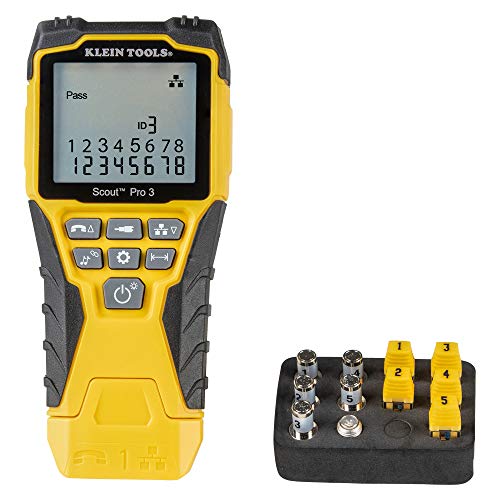
Klein Tools VDV501-851 Scout Pro 3
Reliable wiremapping with tone generation and a clear LCD.
| Product | Best For | Key Spec | Rating | Link |
|---|---|---|---|---|
| Klein Tools VDV501-851 | Best Overall | Wiremap + Tone, 4 remotes | 4.6/5 | Check price |
| Fluke Networks MS2-100 | Professional Diagnostics | Length, PoE, Wiremap | 4.8/5 | Check price |
| Klein Tools VDV512-058 | Budget Wiremap | Basic continuity, no tone | 4.4/5 | Check price |
| iMBAPrice RJ45/RJ11 | Value Basic | LED continuity, cheap | 4.2/5 | Check price |
| Southwire M510GP | Tone & Probe Kit | Tone generator + probe | 4.5/5 | Check price |
Klein Tools VDV501-851 Scout Pro 3
Best OverallPros
- Clear backlit LCD shows wiremap instantly
- Built-in tone generator works with any probe
- Multiple remotes allow testing of long runs
Cons
- No length measurement for cable fault location
- Remote IDs are small and easy to misplace
The Klein Tools VDV501-851 Scout Pro 3 is the most popular cable tester among low-voltage installers for good reason. It performs a full wiremap test on RJ11, RJ12, and RJ45 cables, displaying the result on a bright LCD screen that shows opens, shorts, and miswires. The built-in tone generator is compatible with standard analog probes, making it easy to trace cables behind walls or in bundles.
Owner reviews consistently praise its reliability and ease of use. The unit comes with four remote identifiers, allowing you to label and test multiple runs without swapping remotes. While it lacks advanced features like cable length measurement, for basic continuity and tone tracing it is the best value on the market.
Fluke Networks MS2-100 MicroScanner2
Best ProfessionalPros
- Measures cable length to locate breaks
- Detects Power over Ethernet (PoE) voltage
- Industrial build quality with rubber boot
Cons
- Expensive for casual home use
- Only one remote included, extras cost more
The Fluke Networks MS2-100 MicroScanner2 is the gold standard for professional network installers and IT technicians. Beyond wiremapping, it measures cable length to help locate opens or shorts, and it detects PoE voltage so you can verify switch output. The unit supports RJ11, RJ45, and coax cables, making it versatile for both data and telecom work.
Owner reviews highlight its accuracy and durability. The large backlit display shows results in plain English, and the integrated tone generator works with Fluke probes. The main drawback is the price, but for technicians who need to certify cable runs and troubleshoot complex faults, the MicroScanner2 pays for itself quickly.
Klein Tools VDV512-058
Best Budget WiremapPros
- Very affordable for a Klein Tools product
- Simple LED display shows pass/fail and miswires
- Durable housing with belt clip
Cons
- No tone generator for tracing cables
- LED readout less detailed than LCD models
The Klein Tools VDV512-058 is a no-frills wiremap tester for anyone who just needs to check continuity and pinout on Ethernet and phone cables. It uses a series of LEDs to indicate pass/fail and identify shorts, opens, or reversed pairs. The remote unit is small and plugs into the far end of the cable.
Owner reviews note that it is reliable and built to the same standard as Klein's more expensive testers. It lacks a tone generator and length measurement, so it is best suited for quick verification of patch cables or newly terminated jacks. For the price, it is a solid entry-level tool.
iMBAPrice RJ45/RJ11 Network Cable Tester
Best Value BasicPros
- Extremely low price point
- Battery powered, no setup required
- Compact and portable
Cons
- Plastic build feels less durable
- LED indicators can be hard to read in bright light
The iMBAPrice RJ45/RJ11 Network Cable Tester is the cheapest reliable option for basic continuity testing. It consists of a main unit and a remote, both powered by a 9V battery. Simply plug in the cable, turn it on, and watch the LEDs cycle through each pin to confirm proper wiring.
Owner reviews on Amazon give it high marks for value. Many use it as a spare or for occasional home network projects. It does not have advanced features like tone generation or length measurement, but for checking patch cables or newly crimped connectors, it works perfectly. The build quality is adequate for light use.
Southwire M510GP Tone Generator & Probe Kit
Best Tone Tracing KitPros
- Includes both tone generator and inductive probe
- Works on live circuits with built-in safety
- Adjustable volume and sensitivity on probe
Cons
- Does not perform wiremap testing
- Probe can pick up noise from nearby cables
The Southwire M510GP is a dedicated tone tracing kit designed to help you locate cables in walls, ceilings, or patch panels. The tone generator sends a signal down the wire, and the inductive probe picks it up, allowing you to identify the correct cable even in a dense bundle. It includes alligator clips and RJ45/RJ11 adapters.
Owner reviews highlight the probe's sensitivity and the clear audio output. The kit is particularly useful for telecom and low-voltage installers who need to trace existing wiring without disconnecting it. It does not test continuity or wiremap, so it is best paired with a separate tester like the Klein VDV501-851.
What is a Cable Tester and Why Do You Need One?
A cable tester is an electronic device that verifies the electrical connections in a cable. For Ethernet (Cat5e, Cat6, Cat6a) and phone (RJ11) cables, it checks that each of the eight wires is connected to the correct pin on both ends. This is critical because a single miswire, short, or open will cause the network link to fail or perform poorly.
Without a tester, you are guessing. A cable that looks perfectly terminated can have a hidden fault. Testers save time during installation and are essential for troubleshooting existing networks. They range from simple continuity checkers under $10 to advanced certifiers costing thousands.
Types of Cable Testers
There are three main categories: wiremap testers, tone generators with probes, and advanced certifiers. Understanding the difference helps you choose the right tool for your work.
Wiremap Testers: These check pin-to-pin continuity. They display which wires are connected correctly, swapped, shorted, or open. Most include a main unit and a remote that you plug into the far end. They are the most common type for basic installation and troubleshooting.
Tone Generators and Probes: A tone generator sends a signal down a specific wire. The inductive probe lets you trace that signal through walls or bundles. This is essential for identifying which cable is which in a messy patch panel or wall outlet.
Advanced Certifiers: These measure cable length, near-end crosstalk (NEXT), return loss, and other parameters required to certify that a cable meets a specific category standard (e.g., Cat6). They are expensive and used by professional installers for warranty and compliance work.
What to Check Before Buying
- Cable types supported: Ensure the tester works with the cables you use. Most support RJ45 (Ethernet) and RJ11 (phone). Some also support coax (F-type).
- Wiremap vs. tone vs. length: Decide which features you need. A basic wiremap tester is enough for patch cables. For installed cables, add tone tracing. For fault location, add length measurement.
- Remote units: Some testers include multiple remotes with unique IDs. This lets you test several runs without moving the remote. Essential for large installations.
- Display type: LED indicators are cheap but less clear. LCD screens show the exact pin configuration and are easier to read.
- Build quality: Look for rubber boots, belt clips, and durable connectors. A tester that lives in a tool bag needs to survive drops and dust.
- Battery type: Most use 9V batteries. Some higher-end models have rechargeable batteries. Check availability and runtime.
Mistakes to Avoid
- Buying a certifier when you only need a wiremap: Certification testers cost hundreds or thousands. If you don't need to certify cable runs for a warranty, a simple wiremap tester is sufficient.
- Ignoring the remote: Some cheap testers have a remote that is easy to lose. Check if replacements are available or if the tester works without it.
- Assuming all testers work on live circuits: Most basic testers should only be used on unpowered cables. Using them on PoE or active phone lines can damage the tester.
- Not testing both ends: Always test the cable from both ends using the remote. A tester that only checks one end cannot detect all faults.
FAQs
What is the difference between a cable tester and a network certifier?
A cable tester checks continuity and wiring, while a certifier measures performance parameters like bandwidth and crosstalk to verify the cable meets a standard.
Can a cable tester check PoE (Power over Ethernet)?
Only advanced models like the Fluke MS2-100 can detect PoE voltage. Basic wiremap testers cannot measure power.
Do I need a tone generator if I have a wiremap tester?
Yes, if you need to identify which cable is which in a bundle. A wiremap tester only checks continuity, it cannot trace cables through walls.
What is the best budget cable tester?
The iMBAPrice RJ45/RJ11 tester is the best value for basic continuity checks. For a step up, the Klein VDV512-058 offers better build quality.
Can a cable tester test coaxial cables?
Some testers support coax (F-type) connectors. Check the specifications before buying. Many Ethernet testers do not include coax support.
How do I use a cable tester?
Plug the cable into the main unit and the remote into the other end. Turn on the tester and read the display. A pass result shows all pins connected correctly.
What does a "short" mean on a cable tester?
A short means two wires are touching each other. The tester will show which pins are shorted, allowing you to locate the fault.