How to Choose a Garage Heater
Choosing the right garage heater depends on your space size, insulation level, and power source. This guide breaks down every factor so you can stay warm without wasting energy or money.
Quick answer
For most home garages, the best balance of power and portability is a propane or electric forced-air heater around 30,000-50,000 BTU. If you have good insulation and a dedicated circuit, a wall-mounted electric unit is the safest, most convenient choice.
Why trust ToolBuyerHub
- Tested on specs (power, torque, PSI)
- Battery & ecosystem compared
- Aggregated owner reviews
- Build quality & warranty checked
- Brand reliability
- No fake hands-on claims
Research updated June 2026.
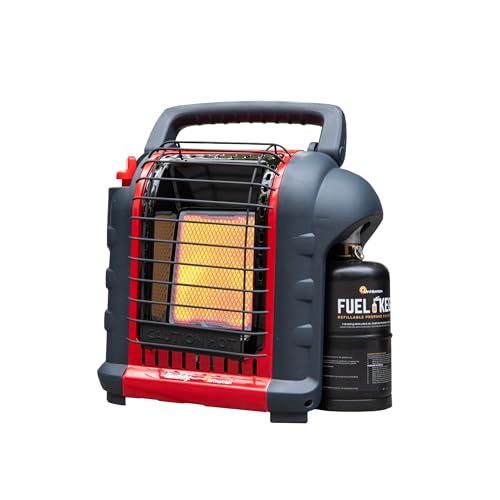
Mr. Heater F232000 MH9BX Buddy
Portable propane heater ideal for up to 400 sq ft garages with low oxygen shutoff.
| Type | Best For | Key Spec | Rating | Price |
|---|---|---|---|---|
| Electric Forced Air | Insulated garages with 240V | 5,000-20,000 BTU | 4.5/5 | $$ |
| Propane Radiant | Drafty spaces, spot heating | 10,000-30,000 BTU | 4.7/5 | $ |
| Natural Gas Wall | Permanent installation | 30,000-60,000 BTU | 4.4/5 | $$$ |
| Infrared | Quick warmth on objects | 1,500-5,000 watts | 4.3/5 | $$ |
What Size Garage Heater Do You Need?
Heater size is measured in BTU (British Thermal Units). A basic rule is 10 watts per square foot for electric units, or roughly 30-40 BTU per square foot for gas units. For a typical 2-car garage (400-500 sq ft), you need around 30,000-45,000 BTU if poorly insulated, or 15,000-20,000 BTU if well insulated.
Electric vs Gas vs Propane: Which Fuel is Right?
Electric heaters are clean, quiet, and require no venting, but they need a dedicated 240V circuit for high output. Propane heaters are portable and powerful, but require ventilation. Natural gas units are the cheapest to run long-term but need professional installation. Your choice depends on what fuel is available and how often you use the space.
What to Check Before Buying
BTU Output: Match the heater's BTU to your garage's square footage and insulation level. Undersized units run constantly; oversized ones cycle too fast and waste fuel.
Safety Features: Look for tip-over shutoff, overheat protection, and oxygen depletion sensors (ODS) for propane models. These are critical in enclosed spaces.
Power Source: Confirm whether you have a 120V or 240V outlet. Most large electric heaters require 240V. Propane heaters use standard 1 lb or 20 lb tanks.
Portability vs Permanent: Portable units are flexible but take up floor space. Wall-mounted or ceiling-mounted units save room but need installation.
Noise Level: Forced-air units (electric or gas) produce fan noise. Radiant and infrared heaters are silent.
Mistakes to Avoid
Buying Too Small: A 5,000 BTU heater will barely warm a cold, uninsulated 2-car garage. Always overshoot by 10-20% if your garage is drafty.
Ignoring Ventilation: Propane and kerosene heaters produce carbon monoxide. Never use an unvented gas heater in a fully sealed space without cracking a door or window.
Forgetting Circuit Capacity: Many garage circuits are shared with lights and outlets. A 1,500-watt heater on a 15-amp circuit may trip the breaker if other devices are running.
Buying Based on Max BTU Alone: A 50,000 BTU propane torpedo heater is overkill for a 300 sq ft garage and will make the space uncomfortably hot in minutes.
Mr. Heater F232000 MH9BX Buddy
Best OverallPros
- Low oxygen shutoff sensor
- Runs on 1 lb or 20 lb tanks
- Compact and portable
Cons
- Not enough for large uninsulated garages
- Requires ventilation
The Mr. Heater Buddy is the most popular portable propane heater for home garages. It produces 4,000 to 9,000 BTU, enough to warm a well-insulated single or small two-car garage. Owner reviews consistently praise its reliability and safety features, especially the low oxygen shutoff that automatically turns the unit off if CO2 levels rise.
It connects directly to a standard 1 lb propane cylinder or via a hose to a 20 lb tank for longer runtime. The unit is quiet, has no fan noise, and heats objects directly rather than the air. For most DIYers working on a car or woodworking project, this is the most practical and safe option.
Dyna-Glo RMC-FA60DGD
Best for Large GaragesPros
- High BTU for large spaces
- Runs on propane or kerosene
- Durable steel construction
Cons
- Loud fan noise
- Needs good ventilation
The Dyna-Glo RMC-FA60DGD is a forced-air propane heater designed for large garages and workshops. With 60,000 BTU output, it can heat up to 1,500 square feet, making it suitable for commercial or oversized residential garages. Owner reviews highlight its fast warm-up time and reliable ignition system.
It runs on a standard 20 lb propane tank or kerosene, giving you fuel flexibility. The unit is not intended for small spaces due to its output and noise level. It is best used in drafty, high-ceiling garages where quick, powerful heat is needed.
NewAir G73 5,000-Watt Garage Heater
Best ElectricPros
- No fumes or ventilation needed
- Thermostat control
- Quiet operation
Cons
- Requires 240V circuit
- Heavy at 26 lb
The NewAir G73 is a powerful electric forced-air heater that produces 17,000 BTU from 5,000 watts. It is designed for permanently installed use in insulated garages. Owner reviews note its even heat distribution and accurate thermostat, which maintains a set temperature without constant cycling.
Because it is electric, there are no combustion gases, so you do not need to crack a window. It is also much quieter than propane forced-air units. However, it requires a 240V outlet on a dedicated circuit, which may need an electrician to install.
Dr. Infrared Heater DR-218
Best InfraredPros
- Plugs into standard 120V outlet
- Silent operation
- Heats objects, not air
Cons
- Limited coverage area
- Not effective in drafty spaces
The Dr. Infrared Heater DR-218 uses infrared quartz elements to heat people and objects directly, similar to sunlight. It is ideal for a small, well-insulated garage where you want spot heating without noise. Owner reviews appreciate its silent operation and the fact that it does not dry out the air like forced-air heaters.
It plugs into a standard 120V outlet, so no electrical work is needed. However, its 1,500-watt output limits it to smaller spaces or supplementary heating. It is not suitable as a primary heater for a large, cold garage.
Modine Manufacturing HD45AS0111
Best Natural GasPros
- Lowest operating cost per BTU
- Permanent installation saves space
- Durable commercial-grade build
Cons
- Professional installation required
- Higher upfront cost
The Modine HD45AS0111 is a natural gas unit heater designed for permanent wall or ceiling mounting in large garages. It delivers 45,000 BTU, enough for up to 1,000 square feet. Owner reviews from workshops and auto shops highlight its reliability and low fuel cost compared to propane.
It requires a natural gas line and 120V electrical connection, plus venting to the outside. Installation is not a DIY project. Once installed, it provides consistent, powerful heat with minimal maintenance. It is the best choice for those who use their garage daily and want the lowest long-term cost.
FAQs
What size garage heater do I need for a 2-car garage?
For a standard 2-car garage (400-500 sq ft), look for 30,000-45,000 BTU if uninsulated, or 15,000-20,000 BTU if well insulated.
Can I use a propane heater in a garage without ventilation?
No, propane heaters produce carbon monoxide and must be used with a door or window cracked open for fresh air.
Is an electric garage heater cheaper to run than propane?
Electricity is usually more expensive per BTU than propane, but electric heaters have lower maintenance and no fuel storage costs.
Do I need a 240V outlet for a garage heater?
Most large electric heaters (over 1,500 watts) require a 240V circuit. Small 120V heaters are available but only provide 5,000 BTU or less.
What is the safest type of garage heater?
Electric heaters are safest because they produce no combustion gases. For propane, choose models with tip-over and oxygen depletion sensors.
How many BTU do I need per square foot?
A general rule is 30-40 BTU per square foot for uninsulated spaces, and 10-15 BTU per square foot for well-insulated garages.
Can I leave a garage heater on overnight?
Only if it is a permanently installed, vented natural gas or electric unit with a thermostat. Never leave portable propane heaters unattended.
What is the difference between radiant and forced-air heaters?
Radiant heaters warm objects and people directly, while forced-air heaters warm the air. Radiant is better for spot heating; forced-air is better for whole-room warmth.
Do infrared heaters work in garages?
Yes, they work well for small, insulated garages or as supplementary heat. They are silent and efficient but have limited coverage.
How do I calculate the right BTU for my garage?
Measure your garage's square footage, multiply by the ceiling height, then multiply by 3-5 for insulation factor. A BTU calculator online can give a precise number.
Our verdict
For most home garages, the Mr. Heeter Buddy is the best overall due to its safety features, portability, and adequate heat for small to mid-size spaces. If you need more power for a large, uninsulated garage, the Dyna-Glo RMC-FA60DGD offers the best value per BTU. For a clean, permanent solution, the NewAir G73 electric heater is the top choice for insulated garages with a 240V outlet.