How to Choose a Safety Harness
A safety harness is the most critical piece of personal protective equipment for anyone working at height. This guide explains harness types, key safety standards, and how to select the correct model for roofing, construction, or industrial use.
Quick answer
Choose a full-body harness that meets ANSI Z359.11 or EN 361 standards, with adjustable leg and shoulder straps and a dorsal D-ring. For most construction and roofing work, the Werner D-Ring Harness or 3M DBI-SALA ExoFit NEX provide the best balance of comfort, safety, and durability.
Why trust ToolBuyerHub
- Checked buying criteria against manufacturer documentation, not marketing copy
- Safety standards compared (ANSI, OSHA, EN)
- Aggregated owner reviews from major retailers
- Build quality & warranty checked
- Brand reliability (Werner, 3M, Guardian, Petzl)
- No fake hands-on claims
Research updated June 2026.
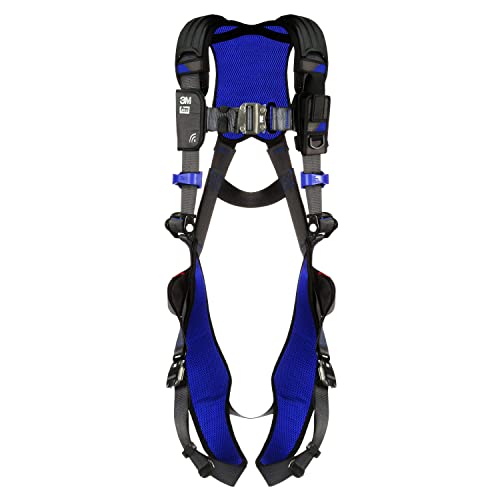
3M DBI-SALA ExoFit NEX
Premium comfort with padded webbing and quick-connect buckles.
| Product | Best For | Weight Capacity | Rating | Price |
|---|---|---|---|---|
| 3M DBI-SALA ExoFit NEX | All-around comfort | 310 lb | 4.8/5 | $$$ |
| Werner D-Ring Harness | Roofing & construction | 310 lb | 4.6/5 | $$ |
| Guardian Fall Protection | Budget-friendly | 310 lb | 4.4/5 | $ |
| Petzl Falcon | Climbing & rope access | 310 lb | 4.7/5 | $$$ |
| Klein Tools 87210 | Lineman & utility | 420 lb | 4.5/5 | $$ |
What is a Safety Harness and Why Do You Need One?
A safety harness is a full-body fall arrest system that distributes the force of a fall across the wearer's shoulders, thighs, and pelvis. It connects to a lanyard or lifeline via a dorsal D-ring located between the shoulder blades. OSHA and ANSI require workers at heights of six feet or more in construction to use a harness with proper anchorage.
Without a harness, a fall from even ten feet can cause severe injury or death. A correctly fitted harness reduces the risk of suspension trauma and ensures the user remains upright after a fall, allowing for quicker rescue.
Key Safety Standards: ANSI, OSHA, and EN
In the United States, the primary standard for full-body harnesses is ANSI Z359.11-2021. This standard specifies minimum strength requirements, hardware corrosion resistance, and labeling. OSHA 1926.502 mandates that all harnesses must meet ANSI standards or equivalent. For European buyers, EN 361:2002 covers full-body harnesses for fall arrest.
Always look for a label or tag on the harness that states compliance. Harnesses without certification should not be used for occupational fall protection. Many harnesses also meet ANSI A10.32 for construction-specific fall protection.
Types of Safety Harnesses
Full-body harnesses are the only type acceptable for fall arrest. Within this category, there are several sub-types:
- Construction harnesses: Heavy-duty webbing, multiple D-rings, and tool loops. Best for roofing, framing, and steel erection.
- Climbing harnesses: Lightweight, designed for rope access and tower climbing. Often have a front D-ring for work positioning.
- Lineman harnesses: Include a belt and side D-rings for pole climbing. Higher weight capacity (up to 420 lb).
- Work positioning harnesses: Allow hands-free work while suspended. Used by window washers and painters.
What to Check Before Buying a Safety Harness
Weight Capacity
Most standard harnesses support up to 310 lb (140 kg) including tools. Heavy-duty models from Klein and others support up to 420 lb. Check your total weight including clothing and equipment before selecting a harness.
D-Ring Configuration
The dorsal D-ring is mandatory for fall arrest. Side D-rings are used for work positioning, and a front D-ring is useful for ladder climbing or rescue. More D-rings add versatility but also weight and cost.
Webbing Material and Width
Polyester webbing is standard, with widths from 1.5 to 2 inches. Wider webbing distributes force better and is more comfortable. Look for abrasion-resistant padding in high-wear areas like the shoulders and legs.
Buckle Type
Quick-connect buckles (like those on the ExoFit NEX) are faster to put on and remove than traditional tongue buckles. Pass-through buckles offer the most secure fit but take longer to adjust.
Comfort and Padding
If you wear a harness for long shifts, padded shoulder straps and leg loops reduce fatigue. Some harnesses have breathable mesh padding for hot environments. The 3M ExoFit NEX is known for its comfortable, padded design.
Attachment Points
Look for a minimum of one dorsal D-ring. Many harnesses add a front D-ring for climbing or rescue, and two side D-rings for positioning. Ensure the D-rings are forged steel or aluminum for strength.
Mistakes to Avoid When Choosing a Safety Harness
- Buying a used harness: Never purchase a second-hand harness. The history of falls, UV damage, or chemical exposure is unknown.
- Ignoring fit: A harness that is too loose can cause injury during a fall. Too tight restricts movement and breathing. Always try on before buying.
- Forgetting the lanyard: A harness alone does not protect you. You need a shock-absorbing lanyard or self-retracting lifeline (SRL) rated for your weight.
- Choosing by price alone: Budget harnesses often lack padding, have thinner webbing, and fewer D-rings. The Guardian Fall Protection is a good budget option, but for daily use, invest in a premium model.
- Not checking the inspection tag: Harnesses must be inspected before each use. If the tag is missing or illegible, do not use the harness.
Best Safety Harnesses Reviewed
3M DBI-SALA ExoFit NEX
Best OverallPros
- Padded shoulder and leg straps for all-day comfort
- Quick-connect buckles reduce donning time
- Breathable mesh back panel reduces heat buildup
Cons
- Higher price point than basic models
- Limited color options for high-visibility work
The 3M DBI-SALA ExoFit NEX is widely regarded as the most comfortable full-body harness on the market. It features 1.75-inch padded webbing with a breathable mesh back that keeps workers cool during long shifts. The quick-connect buckles on the chest, legs, and waist allow for fast donning and doffing, which is critical on busy job sites.
Owner reviews consistently praise the fit and adjustability. The harness includes a dorsal D-ring, two side D-rings, and a front D-ring, making it suitable for fall arrest, work positioning, and rescue. It meets ANSI Z359.11 and is backed by 3M's reputation for safety equipment. The only downsides are the premium price and limited hi-vis options.
Werner D-Ring Harness
Best for Roofing & ConstructionPros
- Durable 1.75-inch polyester webbing
- Padded shoulder and leg straps
- Tool loops for carrying equipment
Cons
- Buckles are traditional tongue style, slower to adjust
- No front D-ring for climbing
The Werner D-Ring Harness is a workhorse for construction and roofing professionals. It features a padded dorsal D-ring with a fall arrest indicator, two side D-rings for positioning, and multiple tool loops. The 1.75-inch webbing is abrasion-resistant and meets ANSI Z359.11 and OSHA standards.
Owner reviews highlight the durability and value for money. The harness is comfortable for all-day wear, though the tongue-style buckles take longer to adjust than quick-connect models. It lacks a front D-ring, so it is not ideal for rope access or rescue scenarios. For general construction and roofing, it is a reliable choice.
Guardian Fall Protection Harness
Best BudgetPros
- Very affordable price point
- Meets all ANSI and OSHA standards
- Lightweight design at under 3 lb
Cons
- Less padding than premium models
- Narrower 1.5-inch webbing
The Guardian Fall Protection Harness is a budget-friendly option that still meets ANSI Z359.11 and OSHA requirements. It has a dorsal D-ring, two side D-rings, and adjustable leg straps. The harness weighs under 3 pounds, making it easy to carry and wear for short to medium shifts.
Owner reviews note that the padding is minimal compared to the 3M ExoFit or Werner models. The 1.5-inch webbing is narrower, which can cause discomfort during prolonged use. For occasional use or tight budgets, it is a solid choice. For daily professional use, consider upgrading to a padded model.
Petzl Falcon
Best for Climbing & Rope AccessPros
- Lightweight at 2.6 lb for rope access
- Front D-ring for climbing and rescue
- Breathable mesh padding
Cons
- Higher price than construction harnesses
- Narrower webbing less comfortable for long hangs
The Petzl Falcon is a professional-grade harness designed for rope access, tower climbing, and rescue work. It features a front D-ring for work positioning, a dorsal D-ring for fall arrest, and two side D-rings. The harness weighs only 2.6 pounds and uses breathable mesh padding to reduce heat.
Owner reviews from arborists and window washers praise the mobility and fit. The Falcon allows excellent freedom of movement while maintaining security. The 1.5-inch webbing is narrower than construction harnesses, which some users find less comfortable during extended suspension. It meets both ANSI and EN standards.
Klein Tools 87210
Best for Lineman & UtilityPros
- High 420 lb weight capacity
- Integrated work belt with tool loops
- 2-inch wide webbing for comfort
Cons
- Heavier than standard harnesses
- Belt can be bulky for tight spaces
The Klein Tools 87210 is a heavy-duty harness built for linemen and utility workers. It has a 420-pound weight capacity to accommodate tools and equipment. The harness includes a padded work belt with multiple tool loops, a dorsal D-ring, and two side D-rings. The 2-inch wide webbing provides excellent load distribution.
Owner reviews from electrical utility workers highlight the durability and high weight rating. The integrated belt is useful for carrying tools but adds bulk. The harness is heavier than standard models, which may be a consideration for climbers. For lineman work, it is a top choice.
FAQs
What is the difference between a safety harness and a climbing harness?
A safety harness is designed for fall arrest with a dorsal D-ring, while a climbing harness often has a front D-ring for work positioning and is lighter for rope access.
How often should a safety harness be replaced?
Replace a harness after any fall, if it shows signs of wear (cuts, fraying, broken stitches), or after 5 years from the date of manufacture per ANSI recommendations.
Can I use a harness without a lanyard?
No, a harness must be connected to a shock-absorbing lanyard or self-retracting lifeline attached to an approved anchorage point to provide fall protection.
What does ANSI Z359.11 mean?
ANSI Z359.11 is the American National Standard for full-body harnesses, specifying minimum strength, hardware, and labeling requirements for occupational fall protection.
How do I know if my harness fits correctly?
Adjust the shoulder and leg straps so the harness is snug but not restrictive, and the dorsal D-ring sits between your shoulder blades with no slack.
What is the maximum weight for a standard harness?
Most standard harnesses have a weight capacity of 310 lb (140 kg) including clothing and tools. Heavy-duty models support up to 420 lb.
Do I need a different harness for roofing vs. tower climbing?
Yes, roofing harnesses prioritize comfort and
Best Portable Air Conditioners of 2026
Another buying guide from this category, picked for you.
Check Price →As an Amazon Associate we earn from qualifying purchases. We recommend on merit — see our disclosure.