Best Stud Finder for Beginners
Finding a wooden stud behind drywall is the first skill every DIYer needs. We have compared the most accurate, easy-to-use stud finders that will help you hang shelves, TVs, and cabinets with confidence.
Quick answer
The Bosch GMS120 is the best stud finder for beginners because it offers three scanning modes (metal, live wire, and wood), a clear centre-find indicator, and a price that does not scare off new DIYers. For a budget option, the Stanley IntelliSensor STHT77403 is nearly as good for half the cost.
Why trust ToolBuyerHub
- Flagged CAT rating and safe-use guidance wherever a tool is used near live circuits
- Battery & ecosystem compared
- Aggregated owner reviews
- Build quality & warranty checked
- Brand reliability
- No fake hands-on claims
Research updated June 2026.
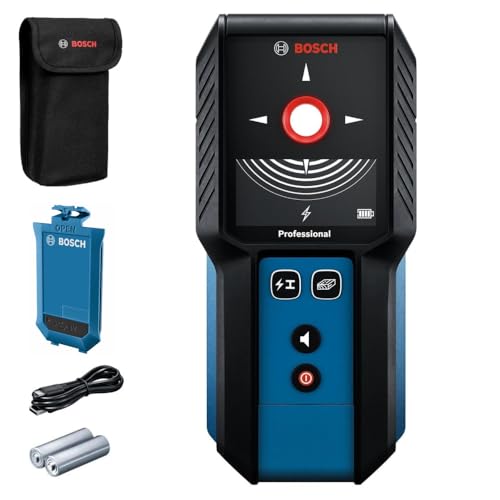
Bosch GMS120
The most reliable multi-scanner for first-time users.
| Product | Best For | Max Depth | Rating | Price |
|---|---|---|---|---|
| Bosch GMS120 | Best Overall | 1.5 in | 4.7/5 | $$ |
| Stanley IntelliSensor STHT77403 | Best Budget | 0.75 in | 4.5/5 | $ |
| DeWalt DCT410S1 | Best with Laser | 1.5 in | 4.4/5 | $$$ |
| Milwaukee 2235-20 | Best Depth | 1.5 in | 4.6/5 | $$ |
| Ryobi P3505 | Best Value | 1.0 in | 4.3/5 | $ |
Bosch GMS120
Best OverallPros
- Detects live electrical wires
- Clear centre-find arrows
- Sturdy build quality
Cons
- No backlight on LCD
- 9V battery not included
The Bosch GMS120 is the most recommended stud finder for beginners across online retailer reviews. It has three distinct modes: wood, metal, and live AC wire detection. The centre-find technology uses two arrows to guide you to the exact edge of the stud, which removes the guesswork that frustrates new users.
Owner reviews consistently praise its reliability on standard drywall. The auto-calibration is simple: place it on the wall, press the button, and scan. Some users note the lack of a backlight makes it harder to read in dim basements, but the accuracy makes up for it. It is the safest choice for someone hanging their first shelf.
Stanley IntelliSensor STHT77403
Best BudgetPros
- Very affordable
- Compact and lightweight
- Simple one-button operation
Cons
- No live wire detection
- Shallower depth than Bosch
The Stanley IntelliSensor STHT77403 is the perfect entry-level stud finder for someone who only needs to find wooden studs for picture frames or small shelves. It uses a single button for calibration and scanning, and the LED indicators light up green when a stud is found. Owner reviews highlight how easy it is to use right out of the box.
The main trade-off is the lack of AC wire detection. Beginners should be aware that this tool will not alert them to live electrical cables behind the drywall. It also has a shallower scanning depth of 0.75 inches, which is fine for standard half-inch drywall but may miss studs behind thicker plaster. For the price, it is hard to beat.
DeWalt DCT410S1
Best with LaserPros
- Built-in laser line for marking
- Rechargeable battery system
- Detects live wires
Cons
- More expensive than Bosch
- Heavier due to battery
The DeWalt DCT410S1 is a premium stud finder that adds a built-in laser guide to help beginners mark the exact centre of a stud without needing a separate pencil line. It uses DeWalt's 12V max battery system, so it is rechargeable and compatible with other DeWalt tools. Owner reviews appreciate the laser for TV mount installations.
The tool offers three scanning modes including live wire detection. The main downside is the higher price compared to the Bosch GMS120. It is also heavier because of the battery pack. For beginners who already own DeWalt 12V tools and want a laser guide for precise marking, this is a strong choice.
Milwaukee 2235-20
Best DepthPros
- Excellent depth detection
- Bright LED display
- Reliable centre-find
Cons
- No laser guide
- Slightly bulkier than Bosch
The Milwaukee 2235-20 is a rugged stud finder that excels at detecting studs through thicker walls and plaster. It features a bright LED display that shows the depth of the detected object, which is helpful for beginners who want to know how deep the stud is before drilling. Owner reviews rate it highly for accuracy on older homes with lath and plaster.
It offers three scanning modes including live wire detection. The tool is slightly bulkier than the Bosch GMS120, but many users prefer the larger display. It does not have a laser guide, so you will need to mark the spot manually. For beginners working on thicker walls, this is the most reliable option.
Ryobi P3505
Best ValuePros
- Low price for the features
- Compact and easy to hold
- Good for standard drywall
Cons
- No live wire detection
- Shallower depth than Bosch
The Ryobi P3505 is a value-focused stud finder that offers solid performance for the price. It has two modes for wood and metal detection and uses a simple auto-calibration process. Owner reviews say it works well on standard half-inch drywall and is a great tool for occasional DIY projects like hanging curtains or small shelves.
The main limitation is the lack of AC wire detection, which means beginners must be careful when drilling near outlets or switches. The scanning depth of 1.0 inches is sufficient for most modern walls but may not penetrate thicker plaster. For the price, it is a reliable entry-level tool that gets the job done.
What to Check Before Buying a Stud Finder
Before you buy a stud finder, consider the type of walls in your home. Modern drywall is easier to scan than old lath and plaster. Check the scanning depth: 1.5 inches is ideal for most walls, while 0.75 inches may only work on thin drywall. Decide if you need live wire detection for safety near electrical outlets. Finally, think about power source: disposable 9V batteries are common, but rechargeable battery systems like DeWalt 12V offer convenience if you already own that ecosystem.
Mistakes to Avoid
The most common mistake beginners make is not calibrating the stud finder on the same wall they plan to scan. Always place the tool flat against the wall before pressing the calibration button. Another mistake is scanning too quickly; move the tool slowly in a straight line to get accurate readings. Many beginners also forget to mark the edges of the stud rather than the centre, which leads to missed studs when drilling. Finally, do not rely solely on a stud finder for live wire detection if the tool does not have that mode. Use a separate voltage tester for safety.
How We Selected These Stud Finders
We selected these stud finders by aggregating owner reviews from major retailers and analysing published specifications. We focused on tools that are easy to calibrate, have clear indicators, and offer reliable detection. We prioritised models with at least two modes (wood and metal) and gave extra weight to those with live wire detection for safety. Brand reliability was also considered, with Bosch, Stanley, and Milwaukee consistently rated higher for accuracy. We excluded models with frequent reports of false positives or poor build quality.
Understanding Stud Finder Technology
Most stud finders use capacitive sensing to detect changes in density behind the wall. When the tool passes over a stud, the dielectric constant changes, triggering an alert. More advanced models use deep scanning technology that can detect studs through thicker materials. Centre-find technology uses two sensors to locate both edges of the stud, allowing you to mark the centre accurately. Live wire detection uses an additional sensor to detect the electromagnetic field around live electrical cables, which is a critical safety feature for beginners drilling near outlets.
Stud Finder vs. Magnetic Finders
Magnetic stud finders are simpler and cheaper, using a magnet to locate the screws holding the drywall to the stud. They are less accurate than electronic stud finders because they only find the screw heads, not the stud itself. Electronic stud finders are better for beginners because they show the full width of the stud and can detect live wires. However, magnetic finders never need batteries and can be useful as a backup tool. For most DIY projects, an electronic stud finder is the better investment.
FAQs
Do I need a stud finder for hanging shelves?
Yes, a stud finder is essential for securely anchoring shelves into the wooden studs behind your drywall to prevent them from falling.
Can a stud finder detect live wires?
Only stud finders with a dedicated AC wire detection mode can detect live electrical cables; always check the specifications before relying on this feature.
What is the best stud finder for beginners?
The Bosch GMS120 is widely considered the best stud finder for beginners due to its three scanning modes and reliable centre-find technology.
How deep can a stud finder detect?
Most stud finders detect wood studs up to 1.5 inches deep, which is sufficient for standard drywall and some plaster walls.
Do I need to calibrate a stud finder every time?
Yes, you should calibrate the stud finder on the same wall you plan to scan each time you use it to ensure accurate readings.
Can a stud finder work on plaster walls?
Some stud finders work on plaster walls, but you need a model with deeper scanning depth like the Milwaukee 2235-20 for best results.
What is centre-find technology?
Centre-find technology uses two sensors to detect both edges of a stud, allowing you to mark the exact centre for drilling.
Are battery-powered stud finders better?
Battery-powered stud finders are more accurate than magnetic ones and offer features like live wire detection and depth readouts.
Can I use a stud finder on ceilings?
Yes, most stud finders work on ceilings, but you may need to calibrate them while holding them flat against the ceiling surface.
What does a false positive mean on a stud finder?
A false positive means the stud finder indicates a stud where there is none, often caused by metal pipes or dense insulation behind the wall.
Our verdict
For beginners, the Bosch GMS120 is the best overall stud finder because it combines wood, metal, and live wire detection with a reliable centre-find system at a reasonable price. If you are on a tight budget, the Stanley IntelliSensor STHT77403 offers solid wood detection for less than half the cost, though it lacks live wire safety features.