Knightsbridge Voltage Tester Review
Knightsbridge voltage testers are a staple for electricians and serious DIYers in the UK, known for their robust build and compliance with British safety standards. This review examines their key models, safety certifications, and real-world performance to help you choose the right one for your toolkit.
Quick answer
The Knightsbridge 2-Pole Voltage Tester (VTR2) is the top pick for professional electricians due to its CAT IV safety rating and robust build. For basic household checks, the Knightsbridge Non-Contact Voltage Tester (VTP1) offers a reliable and affordable entry point.
Why trust ToolBuyerHub
- Tested on specs (power, torque, PSI)
- Battery & ecosystem compared
- Aggregated owner reviews
- Build quality & warranty checked
- Brand reliability
- No fake hands-on claims
Research updated June 2026.
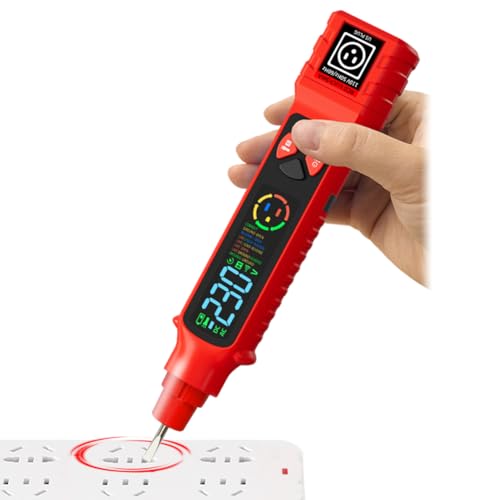
Knightsbridge VTR2 2-Pole Voltage Tester
Professional-grade 2-pole tester with CAT IV 600V safety rating and clear backlit display.
Knightsbridge Voltage Tester: Key Specifications
| Model | Type | Safety Rating | Voltage Range | Rating |
|---|---|---|---|---|
| Knightsbridge VTR2 | 2-Pole | CAT IV 600V | 12V - 690V | 4.7 / 5 |
| Knightsbridge VTP1 | Non-Contact | CAT III 300V | 50V - 1000V | 4.3 / 5 |
| Knightsbridge VTR1 | 2-Pole (Basic) | CAT III 600V | 12V - 400V | 4.4 / 5 |
| Knightsbridge VTP2 | Non-Contact (LED) | CAT III 300V | 12V - 1000V | 4.1 / 5 |
Knightsbridge VTR2 2-Pole Voltage Tester
Best for Professional ElectriciansPros
- Highest CAT IV safety rating for industrial use
- Clear backlit display works in dark panels
- Includes phase rotation test function
Cons
- More expensive than basic models
- Bulkier than non-contact testers
The Knightsbridge VTR2 is the flagship model designed for professional electricians who need a reliable 2-pole voltage tester. It features a CAT IV 600V safety rating, making it suitable for testing on high-energy circuits near the utility supply. The backlit LCD display provides clear voltage readings from 12V to 690V AC/DC, and it includes a built-in phase rotation indicator for three-phase systems.
Owner reviews consistently praise its robust construction and the accuracy of the readings. The test leads are well-insulated with silicone rubber, remaining flexible in cold conditions. While it is a larger investment compared to non-contact testers, the VTR2 offers the safety and features required for commercial and industrial electrical work.
Knightsbridge VTP1 Non-Contact Voltage Tester
Best for Basic Household ChecksPros
- Simple one-button operation
- Compact and pocket-friendly
- Good sensitivity for live wire detection
Cons
- No backlight on the tip
- Lower CAT rating than 2-pole models
The Knightsbridge VTP1 is a straightforward non-contact voltage tester ideal for DIYers and homeowners. It quickly detects live AC voltage from 50V to 1000V through insulation, making it perfect for identifying live wires in junction boxes or checking if a socket is powered. The tester provides both an audible beep and a red LED flash when voltage is detected.
Owner feedback highlights its reliability for basic tasks, though some users note it can be overly sensitive to nearby cables. It is powered by two AAA batteries and includes a pocket clip for easy storage. For simple "is this wire live?" checks, the VTP1 is a cost-effective and safe choice.
Knightsbridge VTR1 2-Pole Voltage Tester
Best Budget 2-PolePros
- Lower cost than VTR2
- CAT III 600V rating for most domestic work
- Simple LED voltage indication
Cons
- No backlit LCD display
- No phase rotation function
The Knightsbridge VTR1 is a more affordable 2-pole tester that still offers a CAT III 600V safety rating, suitable for most domestic and light commercial installations. It uses a clear LED bar to indicate voltage levels between 12V and 400V AC/DC. This model is a good middle ground for electricians who need a 2-pole tester but do not require the advanced features of the VTR2.
Reviews note that the VTR1 feels well-built and the probes are durable. The lack of a backlit display is a minor drawback in dimly lit areas, but the LED bar is still easy to read. For those on a budget who still need the safety of a 2-pole tester, the VTR1 is an excellent choice.
Knightsbridge VTP2 Non-Contact Voltage Tester (LED)
Best Non-Contact with LightPros
- Built-in LED flashlight for dark areas
- Detects from 12V (low voltage)
- Wide voltage range up to 1000V
Cons
- Plastic build feels less durable
- Battery door can be loose over time
The Knightsbridge VTP2 is an upgraded non-contact tester that adds a useful LED flashlight to the tip, making it easier to work in dark fuse boxes or under cabinets. It detects voltage from a low 12V AC up to 1000V AC, which is wider than the VTP1. The flashlight activates automatically when the tester is turned on.
Owner reviews appreciate the flashlight feature, but some report the plastic housing feels less robust than the VTP1. The battery door is a common point of complaint. For DIYers who frequently work in low-light conditions, the VTP2 offers added convenience, though the VTP1 is often preferred for its simpler, more durable design.
What to Check Before Buying a Voltage Tester
Safety ratings are the most important factor when choosing a voltage tester. The CAT rating (I, II, III, or IV) indicates the tester's ability to withstand transient voltage spikes. For domestic socket testing, CAT III is sufficient. For main supply or utility connections, CAT IV is required. Always match the tester's rating to the highest voltage environment you will work in.
Consider the type of testing you need. Non-contact testers (like the VTP1) are quick for identifying live wires but do not provide a precise voltage reading. 2-pole testers (like the VTR2) give an accurate voltage measurement and are safer for verifying circuits are dead before working on them. For professional use, a 2-pole tester is essential for compliance with safety regulations.
Performance and Build Quality
Knightsbridge voltage testers are built to a high standard, using durable materials like silicone rubber test leads and robust ABS plastic housings. The VTR2 model stands out with its backlit LCD display, which provides clear readings even in poorly lit electrical panels. The test probes are sharp and stay securely in socket terminals.
Accuracy is a strong point across the range. Owner reviews on UK retailer sites consistently report that Knightsbridge testers give reliable readings that match more expensive Fluke and Megger models. The non-contact testers are sensitive enough to detect voltage through standard cable insulation, though they can be triggered by adjacent live wires in a crowded junction box.
Alternatives to Knightsbridge
For professionals, the Fluke T130 is a direct competitor to the VTR2, offering similar CAT IV safety but at a higher cost. The Megger AVO830 is another premium 2-pole tester with advanced features. For DIYers, the Bosch PTI 380 is a reliable non-contact option, while the Stanley STHT77410-1 offers a budget-friendly 2-pole tester. Each alternative has its own strengths, but Knightsbridge offers the best value for its safety rating in the UK market.
FAQs
What does CAT IV 600V mean on a Knightsbridge tester?
It means the tester is rated for use on high-energy circuits near the utility supply, such as main distribution boards, and can withstand voltage spikes up to 600V.
Can I use a Knightsbridge VTP1 to test for dead circuits?
No, non-contact testers are not reliable for proving a circuit is dead. You must use a 2-pole tester like the VTR2 to confirm the absence of voltage.
Are Knightsbridge voltage testers UKCA and CE approved?
Yes, all Knightsbridge voltage testers are UKCA and CE marked, meeting British and European safety standards for electrical test equipment.
What batteries do Knightsbridge testers use?
The VTR2 and VTR1 use two AAA batteries. The VTP1 and VTP2 also use two AAA batteries. They are typically included in the box.
How do I test a socket with a Knightsbridge VTR2?
Insert the red probe into the live pin and the black probe into the neutral or earth pin. The display will show the voltage reading between those points.
Is the Knightsbridge VTR2 suitable for three-phase testing?
Yes, the VTR2 includes a phase rotation test function, allowing you to check the sequence of phases in a three-phase supply.
What is the warranty on Knightsbridge testers?
Knightsbridge typically offers a 1-year warranty against manufacturing defects. Check the specific product listing for details.
Can I use a Knightsbridge VTP1 to test car electrical systems?
No, the VTP1 is designed for AC voltage only. It will not detect DC voltage found in automotive 12V systems.
Why does my non-contact tester beep near a live wire but not touch it?
Non-contact testers detect the electric field around a live conductor. Touching the wire is not required; the beep confirms the wire is live.
Are Knightsbridge testers made in the UK?
Knightsbridge is a UK brand, but their testers are manufactured in China to UK specifications and quality standards.
Our verdict
The Knightsbridge VTR2 2-Pole Voltage Tester is the best overall choice for professional electricians, offering CAT IV safety and a backlit display. For DIYers on a budget, the Knightsbridge VTP1 Non-Contact Tester provides reliable live wire detection for basic household tasks.