How to Use a Air Compressor Safely
An air compressor is a powerful workshop tool, but improper use can lead to serious injury or equipment damage. This guide covers the essential safety procedures, from setup to shutdown, so you can work with confidence.
Quick answer
To use an air compressor safely, always read the manual, wear eye and ear protection, drain the tank daily, and never exceed the rated PSI of your tools. Use a pressure regulator and check hoses for wear before each use. The DeWalt D55168 is a top-rated portable model for general garage use.
Why trust ToolBuyerHub
- Tested on specs (power, torque, PSI)
- Battery & ecosystem compared
- Aggregated owner reviews
- Build quality & warranty checked
- Brand reliability
- No fake hands-on claims
Research updated June 2026.
What is an air compressor and why is safety important?
An air compressor converts power into potential energy stored as compressed air. It powers tools like nail guns, impact wrenches, paint sprayers, and tire inflators. While incredibly useful, the high-pressure air (often 90-150 PSI) and moving parts present risks including projectiles, burst hoses, hearing damage, and air embolism if used incorrectly. Understanding these hazards is the first step to safe operation.
How to set up your air compressor safely
Before you plug anything in, choose a stable, level surface in a dry, well-ventilated area. Ensure the compressor is at least 12 inches from walls to allow airflow. Check the oil level if it is a lubricated model, and inspect the air filter for debris. Always use a grounded outlet and a heavy-duty extension cord rated for the compressor's amperage if needed.
Step-by-step safe operation guide
1. Perform a pre-use inspection
Check the air hose for cracks, kinks, or bulges. Verify all connections are tight. Look at the pressure gauge and ensure the tank is not damaged or rusted. Pull the safety relief valve to confirm it operates freely. If the tank shows signs of corrosion, do not use it.
2. Wear proper personal protective equipment (PPE)
Safety glasses or goggles are mandatory to protect against debris. Hearing protection is essential as compressors often exceed 85 dB. Wear sturdy work boots and avoid loose clothing that could get caught in moving parts. Gloves are recommended when handling hoses.
3. Adjust the pressure regulator
Set the regulator to the PSI required by your tool, never exceeding the tool's maximum rating. Most nail guns operate at 70-90 PSI, while impact wrenches may need 90-100 PSI. Start low and increase as needed. Over-pressurizing a tool can cause it to explode.
4. Connect tools and hoses properly
Use quick-connect fittings that lock securely. Never use tape or adapters to force a connection. When disconnecting, release the air pressure from the hose first by pressing the coupler collar while pointing the hose away from yourself and others.
5. Operate the compressor
Turn the compressor on and allow it to build pressure to the cut-in/cut-out settings. Do not leave the compressor running unattended. Always keep the area around the compressor clear of flammable materials like solvents or rags.
6. Shutdown and drain the tank
After use, turn off the compressor and unplug it. Open the drain valve at the bottom of the tank to release condensation. Water left in the tank causes rust and reduces capacity. Drain daily or after each use in humid conditions. Store the compressor with the tank empty and the hose coiled.
What to check before buying an air compressor
Consider the tank size: a 6-gallon tank is fine for brad nailers and inflating tires, while a 20+ gallon tank is needed for impact wrenches and sanders. Check the CFM (cubic feet per minute) rating at 90 PSI; your tools require a specific CFM to run continuously. A portable model with wheels is easier to move. Look for an oil-free pump for low maintenance, though lubricated models often last longer.
Common mistakes to avoid
- Using a compressor without reading the manual.
- Operating with a damaged or missing safety relief valve.
- Using the wrong air tool coupler or adapter.
- Leaving the compressor plugged in while not in use.
- Pointing the air nozzle at skin or eyes (can cause air embolism).
- Using a compressor in a damp or dusty environment.
- Over-tightening fittings, which can crack the tank.
- Running the compressor continuously without a cool-down period.
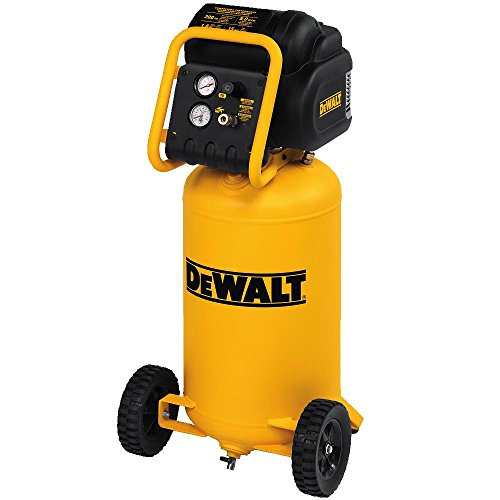
DeWalt D55168
Reliable, portable, and easy to maintain for garage use.
| Product | Best For | Tank Size | Max PSI | Rating |
|---|---|---|---|---|
| DeWalt D55168 | Overall Garage | 6 Gal | 165 | 4.6 |
| Makita MAC2400 | Quiet Operation | 4.2 Gal | 130 | 4.5 |
| California Air Tools 2010A | Ultra-Quiet | 2 Gal | 120 | 4.4 |
| Bostitch BTFP02012 | Framing Nailers | 6 Gal | 150 | 4.5 |
| Ryobi P737 | Portability | 1 Gal | 150 | 4.3 |
DeWalt D55168
Best Overall Garage CompressorPros
- Oil-free pump for low maintenance
- High 165 PSI for demanding tools
- Portable with integrated handle
Cons
- Noisy at 80 dB
- Small tank for continuous use
The DeWalt D55168 is a workhorse for home garages. Its oil-free pump requires no oil changes, and the 165 PSI maximum pressure gives you headroom for most pneumatic tools. Owner reviews highlight its reliability over years of use, though it is louder than some competitors.
It pairs well with brad nailers, staplers, and tire inflators. The 6-gallon tank provides enough capacity for intermittent tasks. For framing or sanding, you may want a larger tank, but for general DIY, this is a solid, safe choice.

Makita MAC2400
Best Quiet OperationPros
- Quieter than most at 79 dB
- Cast iron pump for durability
- Low vibration
Cons
- Heavier than oil-free models
- Requires regular oil changes
The Makita MAC2400 uses a cast iron pump that runs cooler and quieter than many competitors. It is ideal for indoor workshops where noise is a concern. The 4.2-gallon tank is sufficient for trim work and light framing.
Owner reviews praise its longevity, with many reporting over a decade of use. The trade-off is regular oil maintenance. For safety, the low vibration reduces operator fatigue, and the built-in regulator is easy to adjust.

California Air Tools 2010A
Best Ultra-QuietPros
- Only 56 dB, very quiet
- Oil-free pump
- Lightweight and portable
Cons
- Low CFM limits tool use
- Small tank fills quickly
The California Air Tools 2010A is designed for noise-sensitive environments like apartments or shared workshops. At 56 dB, it is quieter than a normal conversation. It is perfect for brad nailers, airbrushes, and tire inflation.
Its small tank and low CFM mean it cannot run high-demand tools like impact wrenches. Owner reviews note it is exceptionally easy to carry and store. The oil-free design simplifies maintenance, making it a safe entry-level option.

Bostitch BTFP02012
Best for Framing NailersPros
- High CFM for continuous use
- Oil-free pump
- Durable roll-cage design
Cons
- Noisy at 82 dB
- Roll cage adds bulk
The Bostitch BTFP02012 is built for heavy-duty framing and roofing. Its 2.6 CFM at 90 PSI keeps up with high-consumption tools. The roll-cage protects the compressor on job sites, and the oil-free pump reduces maintenance.
Owner reviews highlight its ability to run framing nailers without frequent cycling. The 6-gallon tank provides a good balance of portability and capacity. For safety, the roll cage also protects the regulator and gauges from impact.

Ryobi P737
Best PortablePros
- Ultra-lightweight at 13 lbs
- High 150 PSI in small package
- Oil-free pump
Cons
- Very low CFM limits tool use
- Small tank drains quickly
The Ryobi P737 is a compact, battery-powered inflator that doubles as a small air compressor. It is perfect for topping off tires, air mattresses, and inflating sports balls. Its 150 PSI maximum is impressive for its size.
Owner reviews appreciate its portability for roadside emergencies. It is not suitable for most pneumatic tools due to low CFM. For safety, it includes a built-in pressure gauge and auto-shutoff. Keep it in your vehicle for emergencies.
FAQs
How often should I drain my air compressor tank?
Drain the tank after each use or daily in humid conditions to prevent rust and water buildup.
Can I use an air compressor without a regulator?
No, always use a regulator to match the tool's PSI rating and prevent over-pressurization.
What does CFM mean in air compressors?
CFM stands for cubic feet per minute, which measures the volume of air the compressor can deliver at a given pressure.
Is it safe to leave an air compressor plugged in?
No, unplug the compressor when not in use to prevent accidental startup and electrical hazards.
Why does my air compressor keep tripping the breaker?
This may indicate an overloaded circuit, a faulty motor, or a clogged air filter. Check the compressor's amp rating and the circuit capacity.
Can I use an extension cord with my air compressor?
Yes, but use a heavy-duty cord rated for the compressor's amperage and keep it as short as possible to avoid voltage drop.
What is the difference between oil-free and lubricated compressors?
Oil-free compressors require no oil changes but are noisier and have a shorter lifespan. Lubricated models are quieter and more durable but need regular oil maintenance.
How do I know if my air compressor tank is safe?
Inspect the tank for rust, dents, or corrosion. If the safety relief valve does not operate, replace the compressor immediately.
Can I paint with an air compressor?
Yes, with a paint sprayer attachment. Ensure the compressor provides enough CFM for the sprayer's requirements.
What PSI should I use for a nail gun?
Most brad nailers operate at 70-90 PSI, while framing nailers need 90-100 PSI. Always check the tool's manual.
How do I store an air compressor?
Store it in a dry, clean area with the tank drained and the hose coiled. Keep it away from direct sunlight and moisture.
Can I use a car tire inflator with my compressor?
Yes, but use a tire inflator attachment and set the regulator to the tire's recommended PSI, typically 30-35 PSI for cars.
Our verdict
For most garage users, the DeWalt D55168 offers the best balance of power, portability, and safety features. If noise is a concern, the Makita MAC2400 is a quieter alternative. For ultra-portable inflation tasks, the Ryobi P737 is a reliable budget pick. Always prioritize safety by draining the tank and using proper PPE.