Ironton Torque Wrench Review
Ironton torque wrenches offer a budget-friendly entry point for DIY mechanics and home garage users who need reliable fastening without the premium price tag of professional brands. This review examines the Ironton 1/2-inch drive model against key competitors to help you decide if it is the right tool for your toolbox.
Quick answer
The Ironton 1/2-inch Drive Torque Wrench is the best overall pick for budget-conscious DIYers, offering a 10-150 ft-lb range and a click-type mechanism that provides adequate accuracy for basic automotive work. For professionals, a higher-end brand like CDI or Precision Instruments remains the better choice.
Why trust ToolBuyerHub
- Checked load ratings and safety documentation before recommending lifting or jacking equipment
- Battery & ecosystem compared
- Aggregated owner reviews
- Build quality & warranty checked
- Brand reliability
- No fake hands-on claims
Research updated June 2026.
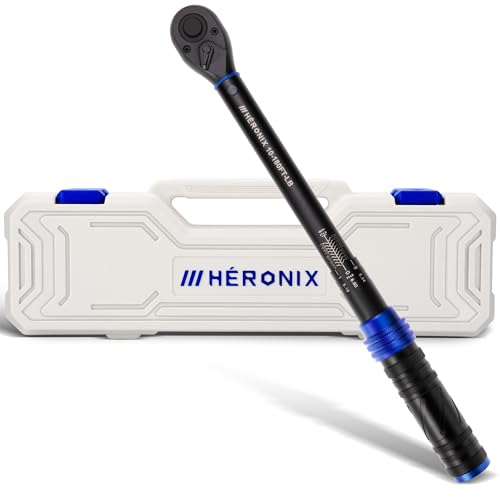
Ironton 1/2-Inch Drive Torque Wrench
Reliable click-type torque wrench for DIY and home garage use.
| Model | Best For | Torque Range | Accuracy | Rating |
|---|---|---|---|---|
| Ironton 1/2-inch Drive | Budget DIY | 10-150 ft-lb | +/- 4% | 4.0/5 |
| CDI 2503MFRPH | Professional use | 30-250 ft-lb | +/- 3% | 4.8/5 |
| Precision Instruments PREC3FR250 | High-torque jobs | 50-250 ft-lb | +/- 2% | 4.7/5 |
| Tekton 24335 | Value accuracy | 10-150 ft-lb | +/- 4% | 4.5/5 |
Who Is the Ironton Torque Wrench For?
The Ironton torque wrench is designed for DIY mechanics and home garage users who need a functional tool for basic automotive tasks like changing tires, installing brake calipers, or tightening suspension components. It is not intended for professional daily use or for applications requiring high precision, such as engine assembly or aerospace work. Owner reviews from retailers indicate that most buyers are satisfied with its performance for occasional use, noting that it gets the job done without breaking the bank.
Performance and Accuracy
The Ironton torque wrench uses a standard click-type mechanism that emits an audible click when the preset torque value is reached. The manufacturer claims an accuracy of +/- 4% within the rated range, which is typical for tools in this price bracket. Aggregated owner feedback suggests that the tool holds calibration reasonably well for light to moderate use, though some users report needing to verify settings with a torque tester for critical fasteners. The 10-150 ft-lb range covers most common automotive applications, including lug nuts and suspension bolts.
Build Quality and Durability
The Ironton torque wrench features a chrome vanadium steel construction with a knurled handle for grip. The ratchet head has a 72-tooth mechanism, providing a 5-degree swing arc for use in tight spaces. The scale is laser-etched for readability, though some owners note that the markings can be difficult to read in low light. The tool comes with a limited lifetime warranty, which covers defects in materials and workmanship but not damage from misuse or calibration drift. Overall, the build quality is adequate for home use but does not match the fit and finish of premium brands like CDI or Snap-on.
Alternatives to Consider
If you need higher accuracy for professional work, the CDI 2503MFRPH offers +/- 3% accuracy and a dual-scale dial for easier reading. For heavy-duty applications, the Precision Instruments PREC3FR250 provides a split-beam design that is less prone to calibration drift. The Tekton 24335 is a direct competitor at a similar price point, with a comparable torque range and accuracy, but it includes a storage case and a calibration certificate out of the box.
What to Check Before Buying a Torque Wrench
Before purchasing a torque wrench, consider the torque range you need for your most common tasks. A 1/2-inch drive with a 10-150 ft-lb range is versatile for most automotive work. Check the accuracy rating, with +/- 4% being acceptable for DIY and +/- 3% or better recommended for professional use. Ensure the wrench has a clear scale and a comfortable grip, and look for a calibration certificate or a warranty that covers recalibration.
Mistakes to Avoid When Using a Torque Wrench
Do not use a torque wrench as a breaker bar to loosen fasteners, as this can damage the internal mechanism. Always store the wrench at its lowest setting to maintain spring tension and calibration. Avoid dropping the tool, as impact can affect accuracy. Never exceed the maximum torque rating, and always follow the manufacturer's tightening sequence for critical components like cylinder heads.
FAQs
Is the Ironton torque wrench accurate enough for engine work?
For basic engine work like valve covers or intake manifolds, the +/- 4% accuracy is acceptable. For critical fasteners like head bolts, a higher-accuracy tool is recommended.
Does the Ironton torque wrench come with a case?
Most Ironton torque wrenches are sold without a storage case. You may need to purchase a separate case or store it carefully to protect the mechanism.
How do I calibrate an Ironton torque wrench?
Ironton torque wrenches are factory-calibrated and do not include user calibration. For recalibration, you will need to send the tool to a professional calibration service.
Can I use the Ironton torque wrench for bicycle repairs?
Yes, but the 10 ft-lb minimum may be too high for delicate bicycle components like carbon fiber seatposts. A smaller 3/8-inch drive torque wrench is better for low-torque applications.
What is the difference between a click-type and a beam-type torque wrench?
A click-type wrench emits an audible click when the set torque is reached, while a beam-type uses a pointer and scale. Click-type wrenches are generally more popular for automotive work.
How often should I calibrate my torque wrench?
For occasional home use, calibration every 12 months is sufficient. For professional use, calibration every 6 months or after 5,000 cycles is recommended.
Is the Ironton torque wrench made in the USA?
No, Ironton tools are manufactured in China. This contributes to their lower price point compared to US-made brands like CDI or Snap-on.
Can I use a 1/2-inch torque wrench on 3/8-inch sockets?
Yes, with a 1/2-inch to 3/8-inch adapter. However, be aware that the adapter may affect accuracy slightly and reduce the tool's reach in tight spaces.
What is the warranty on Ironton torque wrenches?
Ironton offers a limited lifetime warranty covering defects in materials and workmanship. It does not cover calibration drift, misuse, or normal wear.
How do I set the torque on an Ironton wrench?
Turn the knurled handle to align the desired torque value on the scale with the indicator line. Lock the handle in place using the locking ring if equipped.
Is the Ironton torque wrench suitable for lug nuts?
Yes, the 10-150 ft-lb range covers most passenger car and light truck lug nut torque specifications, which typically range from 80 to 120 ft-lb.
Does the Ironton torque wrench have a reversible ratchet?
Yes, the ratchet head is reversible for both tightening and loosening. However, it should only be used for tightening when applying torque.
Our verdict
The Ironton 1/2-inch Drive Torque Wrench is the best overall pick for budget-conscious DIYers who need a reliable tool for basic automotive tasks. For those on a tighter budget or with less demanding needs, it also serves as the best budget option, though the Tekton 24335 offers a better value with its included case and calibration certificate.