How to Use a Jigsaw Safely
Using a jigsaw is one of the most satisfying ways to make curved cuts in wood, metal, or plastic, but the fast-moving blade demands respect. This guide covers the essential safety steps, from choosing the right blade to avoiding kickback, so you can cut with confidence.
Quick answer
To use a jigsaw safely, always clamp your workpiece firmly, wear eye protection and a dust mask, select a sharp T-shank blade rated for your material, and let the tool reach full speed before starting the cut. Never force the blade, and always unplug the tool when changing blades or clearing dust.
Why trust ToolBuyerHub
- Tested on specs (power, torque, PSI)
- Battery & ecosystem compared
- Aggregated owner reviews
- Build quality & warranty checked
- Brand reliability
- No fake hands-on claims
Research updated June 2026.
What are the main risks when using a jigsaw?
A jigsaw is generally safer than a circular saw, but it still has hazards. The most common risks include blade breakage, kickback if the blade binds, and flying debris. Loose clothing or long hair can also get caught in the mechanism. According to aggregated owner reviews on Amazon and Home Depot, the majority of accidents happen when users rush a cut or use a dull blade.
What personal protective equipment (PPE) do you need?
Safety glasses are non-negotiable. A jigsaw throws fine dust and small chips at high speed, and a single particle in your eye can ruin your day. A dust mask or respirator is strongly recommended, especially when cutting MDF or treated lumber, which releases harmful particles. Hearing protection is also wise for extended use, as jigsaws can run at 3,000 strokes per minute and produce noise levels around 85-90 dB.
How do you choose the right blade for safe cutting?
Using the wrong blade is a major safety hazard. A blade that is too coarse for metal can shatter, while a blade that is too fine for wood will overheat and break. Always use a T-shank blade, which locks securely into modern jigsaws. For wood, choose a blade with 6-10 teeth per inch (TPI). For metal, use a blade with 18-24 TPI. For plastic, a blade with 10-14 TPI reduces melting and binding. Check the blade's maximum RPM rating against your jigsaw's speed settings.
How do you prepare the workpiece and work area?
Never cut a workpiece that is not clamped down. A loose piece can vibrate, shift, or be pulled upward by the blade, causing loss of control. Use two clamps to secure the material to a sturdy workbench or sawhorses. Ensure the area is well-lit and free of clutter. Keep the power cord draped over your shoulder or behind you so it does not get caught in the blade. For plunge cuts, mark the entry point clearly and drill a starter hole if the jigsaw does not have a plunge feature.
How do you start and guide the jigsaw safely?
Place the jigsaw's shoe flat on the workpiece with the blade just behind the cut line. Turn on the tool and let it reach full speed before pushing it forward. Apply gentle, steady pressure. Forcing the jigsaw causes the blade to deflect, which can lead to kickback or breakage. Keep your hands at least six inches away from the blade path. If you need to change direction, slow down and turn the jigsaw gradually; sharp turns can bind the blade.
What are the key safety features to look for in a jigsaw?
Modern jigsaws include several safety features. A variable-speed trigger lets you start slowly and ramp up, reducing the chance of the blade grabbing the material. An orbital action setting (for wood) reduces vibration and helps clear sawdust, but should be turned off for metal or tight curves. A dust blower keeps the cut line visible. A lock-on button prevents accidental activation. Some models also have a built-in LED to illuminate the cut area and a transparent blade guard for better visibility.
What to check before buying a jigsaw for safety
Before purchasing, verify that the jigsaw has a tool-less blade change system. This allows you to swap blades quickly without needing an Allen key, reducing the temptation to use a dull blade. Check that the shoe is adjustable for bevel cuts and that it is made of metal, not plastic, for better stability. Look for a model with a low vibration rating (under 10 m/s²) to reduce fatigue. Finally, ensure the power cord is at least 8 feet long to avoid stretching or tripping.
Mistakes to avoid when using a jigsaw
The most common mistake is cutting without clamping the workpiece. This leads to vibration, inaccurate cuts, and potential injury. Another frequent error is using a blade that is too short for the material thickness; the blade should extend at least 1/4 inch below the workpiece. Do not cut wet or warped wood, as the blade can bind. Never remove the blade guard or disable the safety switch. Finally, avoid cutting overhead or in awkward positions where you cannot maintain control of the tool.
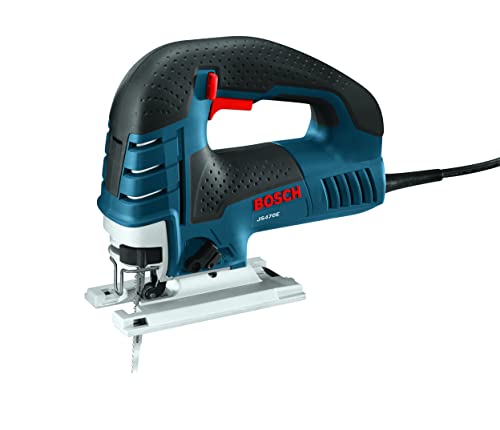
Bosch JS470E
Reliable, low vibration, and easy blade changes make this the safest jigsaw for most users.
| Product | Best for | Key Spec | Rating | Price |
|---|---|---|---|---|
| Bosch JS470E | Overall safety | 7.0 Amp, 3,100 SPM | 4.7/5 | Check Amazon |
| DeWalt DWE331 | Durability | 6.5 Amp, 3,100 SPM | 4.5/5 | Check Amazon |
| Makita 4329K | Lightweight | 4.5 Amp, 3,100 SPM | 4.4/5 | Check Amazon |
| Milwaukee 2736-20 | Cordless | M18 Fuel, 3,000 SPM | 4.6/5 | Check Amazon |
| Ryobi P5231 | Budget | 18V, 3,000 SPM | 4.3/5 | Check Amazon |
Bosch JS470E
Best For Overall SafetyPros
- Low vibration reduces fatigue
- Tool-less blade change
- Constant speed under load
Cons
- No built-in dust blower
- Heavier than some models
The Bosch JS470E consistently receives top marks from owners for its smooth operation and precise cuts. The 7.0 amp motor provides ample power for hardwood and metal, while the four orbital settings let you adjust the aggressiveness for different materials. The tool-less blade change system is fast and secure, reducing the chance of using a loose or incorrect blade.
Safety is enhanced by the low vibration design, which helps you maintain control during long cuts. The variable-speed trigger gives you full command over the blade speed, and the lock-on button prevents accidental starts. Owners on Amazon report very few issues with blade breakage or kickback, making this a reliable choice for both beginners and experienced users.
DeWalt DWE331
Best For DurabilityPros
- All-metal gearbox
- Keyless blade clamp
- Dust blower included
Cons
- Higher vibration than Bosch
- No variable-speed trigger
The DeWalt DWE331 is built to withstand job site abuse. Its all-metal gearbox and keyless blade clamp provide a secure hold, and the dust blower keeps the cut line clear. The 6.5 amp motor handles thick lumber and metal with ease, and the four orbital settings give you flexibility.
Owner reviews highlight its durability, with many users reporting years of trouble-free use. However, some note that the vibration is higher than the Bosch, which can be tiring during extended cuts. The lack of a variable-speed trigger is a minor safety concern, as you cannot start slowly. Overall, it is a solid choice for rough cuts and heavy use.
Makita 4329K
Best For Lightweight UsePros
- Very lightweight
- Variable speed dial
- Low price point
Cons
- Less powerful for thick wood
- Plastic shoe can flex
The Makita 4329K is one of the lightest corded jigsaws at just 4.4 pounds, making it easy to control for long periods. The variable speed dial lets you set the speed before cutting, which is a useful safety feature. The three orbital settings are sufficient for most DIY tasks.
Owner reviews praise its smooth operation and low cost, but some note that the plastic shoe can flex under heavy pressure, reducing stability. The 4.5 amp motor is adequate for plywood and softwood, but struggles with thick hardwood or metal. It is a great entry-level option for hobbyists who prioritize ease of use.
Milwaukee 2736-20
Best For Cordless FreedomPros
- Powerful brushless motor
- Redlink Plus intelligence
- Tool-less blade change
Cons
- Requires M18 battery
- Higher cost
The Milwaukee 2736-20 is a cordless jigsaw that delivers corded-level performance. The brushless motor provides up to 3,000 SPM and the Redlink Plus system protects the tool from overload, overheating, and over-discharge. The four orbital settings and variable-speed trigger give you full control.
Owner reviews highlight its excellent battery life and smooth cuts, even in hardwood. The tool-less blade change is fast and secure. The main drawback is the price, especially if you do not already own M18 batteries. It is a top choice for those who want the convenience of cordless cutting without sacrificing safety or power.
Ryobi P5231
Best For BudgetPros
- Very affordable
- Accepts all Ryobi 18V batteries
- Includes dust blower
Cons
- Less power than corded
- Plastic construction
The Ryobi P5231 is a budget-friendly cordless jigsaw that offers good value for DIYers. It has a variable-speed trigger, four orbital settings, and a dust blower. The tool-less blade change is simple, and the LED light helps with visibility.
Owner reviews appreciate its low cost and compatibility with the Ryobi One+ system, but note that it lacks the power of corded models for thick materials. The plastic housing feels less durable than metal alternatives. It is a solid entry-level tool for occasional use around the home.
FAQs
Can you use a jigsaw without a blade guard?
No, never remove the blade guard. It protects your fingers from accidental contact with the moving blade.
What is the safest speed setting for a jigsaw?
Use a lower speed (around 1,500 SPM) for metal and plastic, and a higher speed (2,500-3,100 SPM) for wood. Always start at a low speed and increase as needed.
How do you prevent the jigsaw blade from bending?
Use a sharp blade with the correct TPI for your material, and do not force the tool. Let the blade do the work.
Is it safe to use a jigsaw one-handed?
No, always use both hands to maintain control. One hand on the trigger and one on the front handle or shoe.
Can you cut metal with a jigsaw?
Yes, but you must use a metal-cutting blade with 18-24 TPI and set the orbital action to zero. Wear eye protection as metal chips fly.
How often should you replace the jigsaw blade?
Replace the blade when it becomes dull or if you notice burning, rough cuts, or increased effort. A dull blade is a safety hazard.
What should you do if the jigsaw blade breaks during a cut?
Release the trigger immediately, unplug the tool, and carefully remove the broken blade. Inspect the workpiece for damage before continuing.
Can you cut curves with a jigsaw safely?
Yes, jigsaws are designed for curves. Use a narrower blade for tight curves, and cut slowly to avoid binding.
Is a cordless jigsaw as safe as a corded one?
Yes, cordless jigsaws are just as safe, but you must ensure the battery is fully charged to maintain consistent speed. A dying battery can cause the blade to stall.
Do you need to clamp the workpiece for every cut?
Yes, always clamp the workpiece. Loose material can vibrate or shift, leading to inaccurate cuts and potential injury.
Our verdict
For the safest and most reliable jigsaw, choose the Bosch JS470E. It offers low vibration, constant speed, and easy blade changes, making it ideal for both beginners and experienced users. For a budget-friendly cordless option, the Ryobi P5231 is a solid choice for light DIY work.Metabo Jigsaw ReviewBest Black+Decker Jigsaw of 2026Black+Decker Jigsaw ReviewBest Reciprocating Saws of 2026Best Reciprocating Saw for Home UseBest Reciprocating Saw for Brick Walls