Best Safety Gear
Safety gear only works if you keep it on, and the usual reason people take it off is comfort rather than inconvenience. Glasses fog, muffs get hot, a respirator seals badly and gets pushed up. So the useful comparison is not which item is strongest, it is which one you will still be wearing an hour in.
The second thing worth knowing is that the ratings are not decoration. ANSI Z87.1 on eyewear, an NRR number on hearing protection and NIOSH approval on a respirator are the difference between protection and the appearance of it. Each pick below names its rating.
Quick answer
Start with 3M Virtua ANSI Z87 glasses and 3M Peltor X series muffs, which cover the two risks present on nearly every job. Add a 3M 6200 half facepiece respirator before any sanding, cutting or spraying, and Klein 60582 cut resistant gloves for blade and sheet metal work. Fall protection is not optional above six feet.
Why trust ToolBuyerHub
- Every item here is a named brand sold on Amazon US, checked against the live listing
- Specifications come from manufacturer and listing data, not from guesswork
- Owner-feedback themes are summarized as feedback, never as our own hands-on testing
- No invented star ratings; the Research Score criteria are visible on each pick
- ANSI, NRR and NIOSH ratings are reported as the maker states them, and what each covers is explained
- Comfort is treated as a safety feature, since gear that comes off protects nothing
Research updated October 2026.
What Matters Most When Buying Safety Gear
Match the gear to the actual hazard rather than buying a boxed kit. Eye protection needs to carry ANSI Z87.1, which means it has passed impact testing; a fashion lens has not. Hearing protection carries a Noise Reduction Rating, and the practical rule is that anything above about 85 decibels sustained needs it, which includes most power tools. Respiratory protection needs NIOSH approval and, crucially, the right cartridge: a particulate filter does nothing against solvent vapour, and a dust mask does nothing against either if it does not seal. Hand protection is split between cut resistance, rated by level, and abrasion, which are different problems. Then consider fit and comfort honestly, because the most common failure in all of this is gear that gets pushed up, pulled down or left in the van.
| Model | Best for | Key specs | Research Score |
|---|---|---|---|
| 3M Virtua Safety Glasses, Clear Lens, ANSI Z87 | Everyday eye protection | ANSI Z87.1, Clear polycarbonate | 91/100 |
| 3M Solus 1000 Safety Glasses, Scotchgard Anti-Fog Clear Lens | Humid work and anyone who keeps lifting their glasses | ANSI Z87.1, Scotchgard anti-fog | 93/100 |
| 3M Peltor X Series Over the Head Ear Muffs, NRR 31 | Power tools and shop work | NRR 31, Over the head muff | 92/100 |
| 3M Half Facepiece Reusable Respirator 6200, NIOSH, Medium | Sanding, cutting, spraying and solvents | NIOSH, Half facepiece, reusable | 94/100 |
| Klein Tools 60582 A1 Cut-Resistant Work Gloves, 2 Pair | Blades, sheet metal and wire | ANSI cut level A1, 2 pairs | 88/100 |
| Ergodyne ProFlex 360 Hinged Hard Shell Non-Marring Knee Pads | Any work spent on your knees | Hard shell, non-marring, Hinged | 89/100 |
| DeWalt D3000 Vest Style 5-Point Safety Harness with Back and Side D-Rings | Roof and elevated work | Vest style, 5-point, Back and side | 90/100 |

3M Virtua Safety Glasses, Clear Lens, ANSI Z87
Buy These FirstPros
- Carries ANSI Z87.1 impact rating, which is the specification that separates PPE from fashion eyewear
- Cheap enough to keep several pairs, in the van, on the bench and in the toolbag
- Wraparound shape covers the sides, where most eye injuries actually arrive from
Cons
- No anti-fog coating, so they will fog in humid work or when you are working hard
- Basic comfort, so they are less pleasant over a full day than premium frames
The first thing to buy and the easiest to justify. Eye injuries are the most common serious DIY injury and the cheapest to prevent, and the only specification that matters is ANSI Z87.1, which means the lens survived a defined impact test. Buying several cheap compliant pairs beats one expensive pair you left somewhere, because the pair you are wearing is the only one that protects you.

3M Solus 1000 Safety Glasses, Scotchgard Anti-Fog Clear Lens
Best Anti-FogPros
- Anti-fog coating addresses the single biggest reason people take safety glasses off
- Scotchgard treatment lasts noticeably longer than cheap anti-fog sprays and films
- More comfortable frame than basic glasses, which matters across a full day
Cons
- Costs several times more than basic Z87 glasses
- Anti-fog coatings degrade if wiped with a dry dirty cloth or harsh cleaner
Worth the upgrade if you have ever pushed your glasses up to see what you are doing. Fogging is not a comfort complaint, it is a protection failure, because the glasses end up on your forehead at exactly the moment the grinder is running. A durable anti-fog coating keeps them on your face. Clean them with water and a soft cloth, since dry wiping and solvents strip the coating.

3M Peltor X Series Over the Head Ear Muffs, NRR 31
Best Hearing ProtectionPros
- An NRR of 31 is at the high end for muffs, suited to circular saws, routers and mowers
- Muffs go on and off in a second, so they are actually used for short noisy tasks
- Replaceable cushions, so they do not become unhygienic and hard over time
Cons
- Hot in summer, which is the main reason muffs get abandoned
- Bulky to carry compared with plugs
Hearing damage is cumulative and permanent, and it happens at noise levels that do not feel dangerous. Most power tools sit well above the threshold where protection is needed. Muffs beat plugs in practice for one reason: you can put them on for the thirty seconds of cutting and take them off again, whereas plugs are fiddly enough that people skip short tasks. Replace the cushions when they harden.
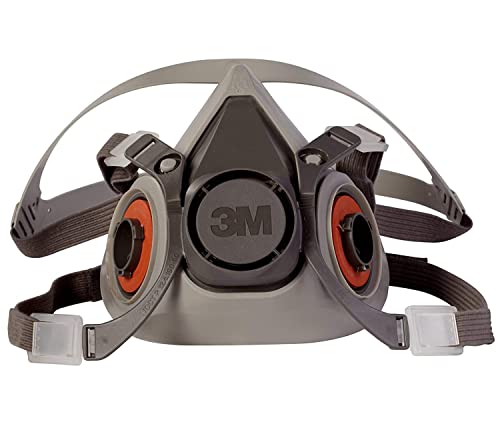
3M Half Facepiece Reusable Respirator 6200, NIOSH, Medium
Best RespiratorPros
- Takes interchangeable cartridges, so one mask covers dust, solvent vapour and spraying
- Reusable silicone facepiece seals far better than a disposable dust mask
- NIOSH approved, which disposable comfort masks sold as dust masks generally are not
Cons
- Cartridges are a separate purchase and the right type must be matched to the hazard
- A beard breaks the seal, which means the mask is not protecting you regardless of fit
The item most people skip and most need. Silica dust from cutting concrete or tile, wood dust from sanding, and solvent vapour from spraying all cause lasting damage, and a paper dust mask does almost nothing against any of them because it does not seal. A half facepiece does, and the cartridge choice is the whole point: particulate filters for dust, organic vapour cartridges for solvents and paint.

Klein Tools 60582 A1 Cut-Resistant Work Gloves, 2 Pair
Best Cut ProtectionPros
- Rated cut resistance rather than a vague claim, so you know what you are getting
- Thin enough to keep real dexterity, which is why they stay on for fiddly work
- Two pairs, since work gloves are consumables
Cons
- A1 is the lowest cut level, suited to light blade and sheet work rather than glass or heavy knife use
- Cut resistance is not puncture resistance, so it will not stop a nail or a splinter
Useful for the jobs where a slip means a cut: stripping wire, handling sheet metal edges, utility knife work, clearing broken material. The cut level is worth understanding rather than ignoring, since A1 covers light tasks and higher levels exist for glass handling and heavy blade work. Thinness is a feature here, because a thick glove gets removed for anything precise.

Ergodyne ProFlex 360 Hinged Hard Shell Non-Marring Knee Pads
Best Knee ProtectionPros
- Non-marring cap protects finished floors, unlike standard hard plastic caps
- Hinged design follows the knee rather than fighting it when you shuffle forward
- Hard shell still spreads load properly on concrete and subfloor
Cons
- Bulkier than sleeve style pads for frequent short kneeling
- Hinged construction has more parts that can eventually wear
Knee damage from kneeling is slow, cumulative and usually ignored until it is not. This pad is on the list because it resolves the usual conflict: hard caps protect your knees but scratch finished floors, while soft pads protect floors and not knees. A non-marring hard shell does both, and the hinge means it stays put as you move instead of sliding down your shin.

DeWalt D3000 Vest Style 5-Point Safety Harness with Back and Side D-Rings
Best Fall ProtectionPros
- Vest style spreads arrest forces across the torso rather than concentrating them
- Back and side D-rings cover both fall arrest and work positioning
- Quick connect chest buckle makes correct fitting fast, which is when people get it wrong
Cons
- A harness alone is not a system; it needs a rated anchor and a lanyard or lifeline
- Needs inspecting before every use and retiring after any fall event
Included with a plain caveat: a harness is one part of a fall arrest system, and buying one without a properly rated anchor point and the correct lanyard gives you equipment rather than protection. Falls are the leading cause of serious injury in this kind of work. If you are working at height, get the full system, learn how to fit it, inspect it before each use, and retire anything that has taken a fall.
Buy for the hazard, not as a kit
Boxed safety kits are tempting and usually wrong, because they bundle whatever is cheap rather than what your work needs. Work out what the job actually produces: impact and flying debris means eye protection, sustained noise means hearing protection, dust or vapour means respiratory protection, blades and sheet edges mean cut resistant gloves, kneeling means knee pads, height means a fall arrest system. Buy those individually and to the right rating. One correct item beats a kit of five approximate ones, and the money saved on fillers pays for better versions of what you will actually wear.
The ratings that mean something
ANSI Z87.1 on eyewear means the lens has passed defined impact testing; without it you have sunglasses. The Noise Reduction Rating on hearing protection is a laboratory figure, and real world protection is lower, so treat a higher NRR as headroom rather than a promise. NIOSH approval on a respirator means the filter media and the facepiece are tested as a unit, and the cartridge type must match the hazard: particulate filters stop dust and do nothing for solvent vapour. Cut resistant gloves carry an ANSI level from A1 upward, where A1 is light duty and higher levels are for glass and heavy blade work.
Comfort is a safety specification
Nearly every PPE failure in practice is behavioural. Glasses fog so they go on the forehead. Muffs get hot so they come off for the one cut that mattered. A respirator seals badly so it gets pushed down. A knee pad slides down the shin so it gets abandoned. This is why anti-fog coatings, replaceable muff cushions, properly sized respirators and hinged knee pads are worth paying for: they are not luxuries, they are the difference between gear that is worn and gear that is owned. When choosing between two compliant items, choose the one you will tolerate for longer.
Respirators, seals and the dust mask myth
A disposable paper dust mask that does not seal to your face provides very little protection, because air takes the easiest path and that is around the edge rather than through the filter. This matters most with the hazards that cause permanent harm: silica dust from cutting concrete, masonry or tile, fine wood dust from sanding, and solvent vapour from paints and adhesives. A reusable half facepiece seals properly and accepts the correct cartridge for the hazard. Facial hair along the seal line breaks that seal, and no amount of tightening fixes it, so a clean seal area is part of the protection.
FAQs
What safety gear do I actually need for DIY?
Eye protection and hearing protection cover nearly every job and should be bought first. Add a NIOSH approved respirator before any sanding, cutting of masonry or spraying, cut resistant gloves for blade and sheet metal work, knee pads if you work on your knees, and a full fall arrest system for any work at height.
What does ANSI Z87.1 mean on safety glasses?
It means the eyewear has passed a defined impact resistance test and is rated as protective eyewear rather than ordinary glasses. Lenses without that marking may look identical and offer very little protection against flying debris. It is the single specification worth checking before buying any eye protection.
Is a dust mask enough for sanding or cutting concrete?
No. A disposable paper mask that does not seal to the face lets air pass around the edges rather than through the filter, which is where the protection is. Silica dust from masonry and fine wood dust both cause lasting lung damage, so use a NIOSH approved respirator, such as a half facepiece with particulate cartridges, that actually seals.
What NRR do I need for hearing protection?
For most power tools, a muff or plug in the high twenties to low thirties NRR range is appropriate. Note that NRR is a laboratory figure and real world protection is lower, so treat a higher number as headroom. The more important practical point is choosing protection you can put on quickly, since short noisy tasks are the ones people skip protection for.
What is the difference between cut resistant and puncture resistant gloves?
Cut resistance means the glove resists a slicing blade edge, and it is graded on an ANSI scale from A1 upward. Puncture resistance is a separate property, resisting a point such as a nail, thorn or staple. A high cut level glove can still be pierced, so match the glove to whether your hazard is a blade or a point.
Do I need a respirator cartridge for paint?
Yes, and it must be the right type. Particulate filters stop dust and mist but do nothing against solvent vapour, which is what oil based paints, lacquers and many adhesives release. Use organic vapour cartridges for those, and combination cartridges if you are spraying, since spraying produces both vapour and aerosol.
Does a beard stop a respirator working?
Yes, if it crosses the seal area. Air follows the easiest path, so any gap between the facepiece and skin lets unfiltered air straight in, and tightening the straps does not fix it. For a tight fitting respirator the seal area must be clean shaven. Loose fitting powered respirators and hoods are the alternative for people who will not shave.
Is a safety harness enough for working on a roof?
No. A harness is one component of a fall arrest system, which also needs a rated anchor point and the correct lanyard or lifeline, plus enough clearance below for the system to work. Buying a harness alone gives you equipment rather than protection. Inspect everything before each use and retire any component that has arrested a fall.
Are expensive safety glasses worth it?
Often yes, for one specific reason: anti-fog coatings and better frames mean the glasses stay on your face. Basic compliant glasses protect exactly as well while they are being worn, and the common failure is that fogging or discomfort puts them on your forehead. If that is you, the upgrade buys protection rather than comfort.
Our verdict
Buy 3M Virtua glasses and Peltor X series muffs today, since between them they cover almost every job and cost very little. Buy the Solus 1000 instead if fogging has ever made you lift your glasses. Add the 3M 6200 respirator with the correct cartridge before any dust or spraying work, because that is the hazard with the worst long term outcome. Klein cut resistant gloves and Ergodyne knee pads follow from the work you do, and if you go up a ladder onto a roof, buy a complete fall arrest system rather than a harness on its own.